
Analog Reading, Digital Knowledge: The Full Pipeline From Paper Notes to AI Skills
I read books on paper, take handwritten notes, and turn them into connected atomic notes and AI skills. Here's the full pipeline, and the thinking behind each step.

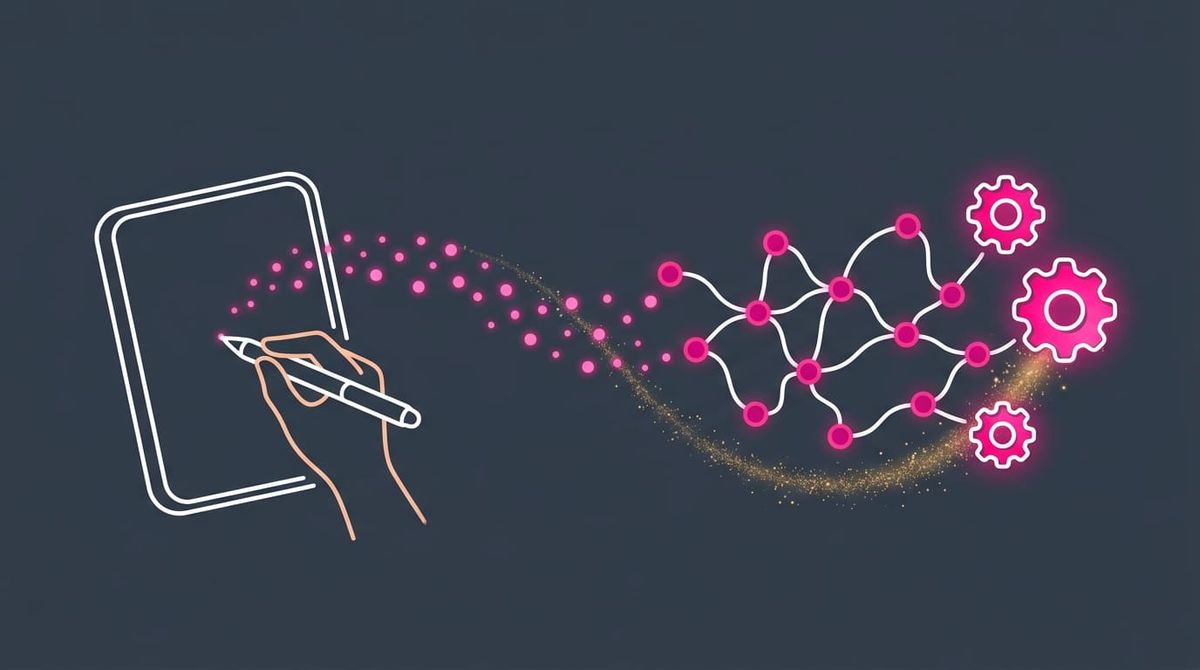
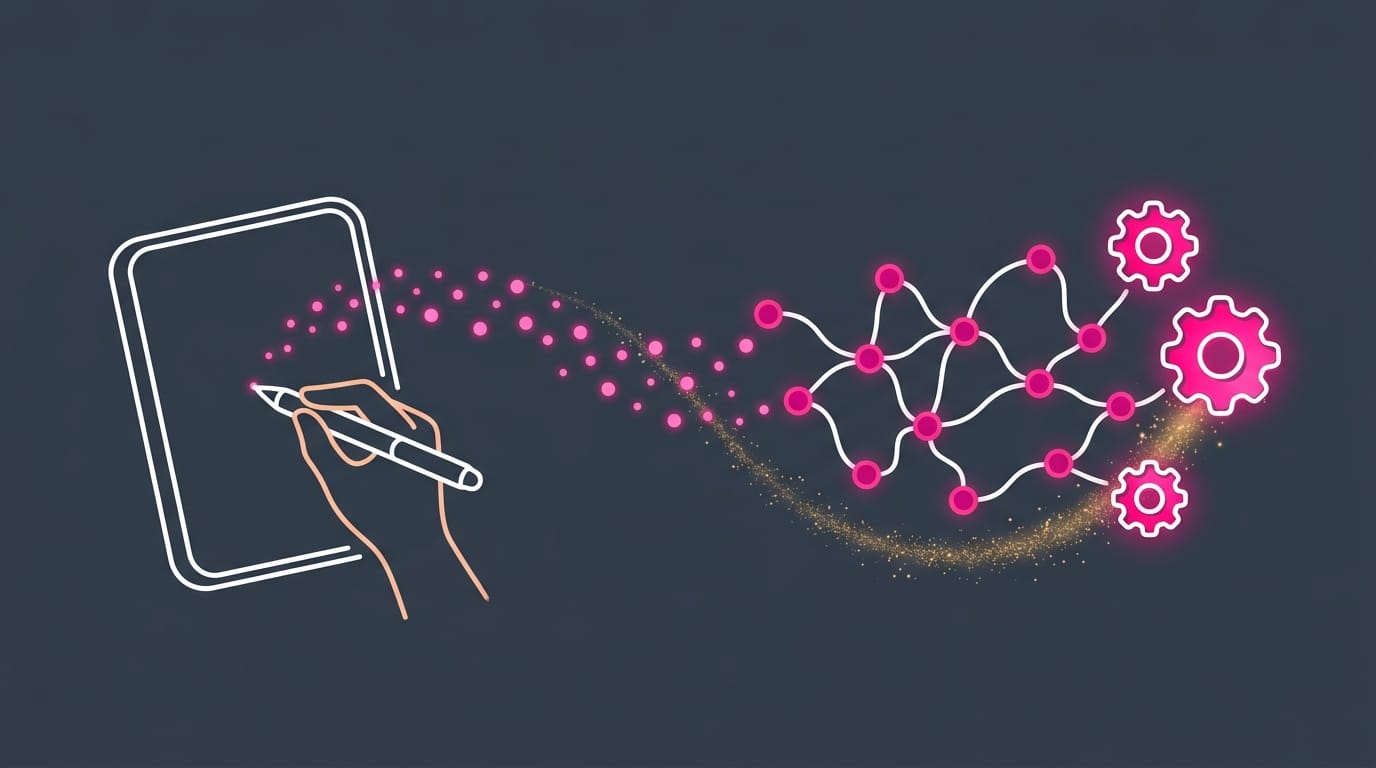
I read books on paper. I take handwritten notes. And those notes end up as connected knowledge and reusable AI skills in my system. Here's exactly how that works, and why each step matters.
In this article, I want to share the full pipeline I use to go from analog reading to digital knowledge. Not just the tools, but the thinking behind each step. Why I capture notes the way I do, why I break them into atomic pieces, why I connect them, and why I turn some of them into AI skills that actively help me think and work.
📬 If you enjoy this, subscribe to my newsletter for more tips on AI, Knowledge Management, and (Zen) Productivity.
Introduction
I've been reading non-fiction seriously for years. And for a long time, my notes from books just... sat there. I'd highlight passages, write things in the margins, maybe copy a few quotes into a note-taking app. But weeks later, I could barely remember what I'd read, let alone apply it.
The problem wasn't laziness. I was doing the work. The problem was that my notes were trapped. Trapped in book margins, trapped on devices, trapped in apps that didn't talk to each other. They lived in isolation, and they died in isolation.
So I built a pipeline. It often starts with a pen and paper (or an e-ink tablet), and it ends with AI skills that actively participate in my thinking. Each step serves a purpose, and skipping any of them leaves value on the table.
Let me walk you through it.
TL;DR
Here's the pipeline in one sentence: read a book, take handwritten notes, sync them to your vault, convert them to Markdown, decompose them into atomic notes, connect them to your existing knowledge graph, and turn the actionable ones into AI skills.
Key points:
- Your knowledge system must support capture in any context, not just at your computer
- Notes that stay in book margins or on isolated devices are nearly wasted effort
- Books present ideas in a linear order, but the underlying structure is a graph
- Decomposing a book into atomic notes recovers that graph
- The primary heuristic for atomicity is connectability: can this idea link to other ideas?
- Connecting ideas across books and domains is where real leverage appears
- Wisdom is knowledge put to action. AI skills are one concrete way to bridge that gap
- The whole pipeline compounds over time. Each book makes the system smarter
Step 1: Read and Capture (Anywhere)
First and foremost, your knowledge system must support capture in any situation. Whether you're at your desk, on the couch, in a café, or on a train. The medium doesn't matter. What matters is that everything eventually flows into one system.
I use a reMarkable tablet for reading and taking handwritten notes. But that's just my preference. You could use paper, an iPad, or even your phone. The point is NOT to be "analog first" or "digital first." The point is to be capture-first, regardless of context.
When I read a non-fiction book, I don't just highlight. I write separate notes. I capture the ideas, the frameworks, the things that surprised me, the things I disagree with. I write them in my own words, because if I can't explain an idea in my own words, I don't understand it well enough to use it later.
This is an important distinction. Marginalia is not knowledge management. Writing in the margins of a book feels productive, but those notes are trapped in the source material. They can't connect to anything outside that book. They create no leverage. If you take book notes and those notes just stay in the book, you never do anything with them and never connect them with the rest of your knowledge. To me, that's almost wasted time.
Taking notes while reading is a real skill, and it's worth acquiring. I wrote more about this in a previous article.
 Sebastien Dubois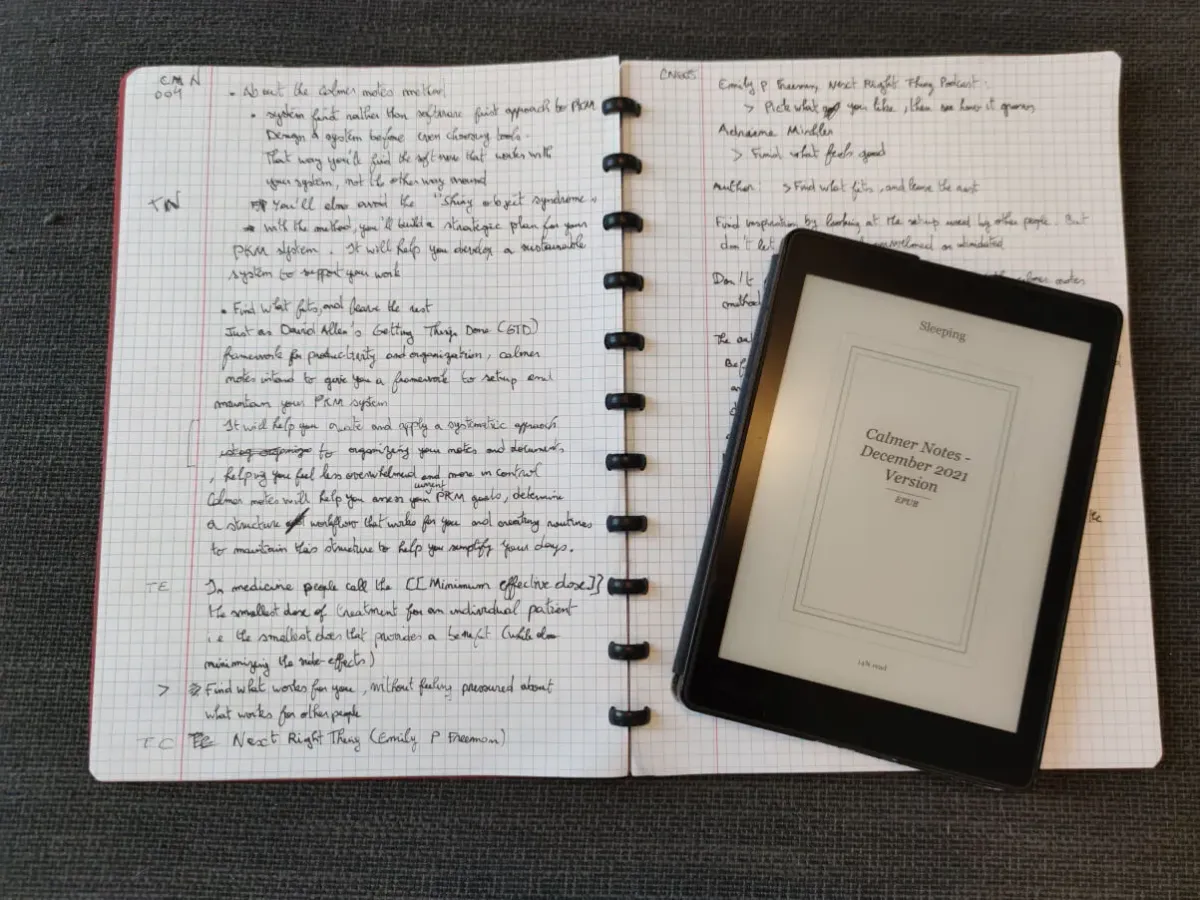
Step 2: Sync to Your Vault
Once I have pages of handwritten notes, I need to get them into my Obsidian vault. This is where the reMarkable Sync plugin for Obsidian comes in. I wrote about it recently. It pulls my notebook pages directly into the vault as images, preserving the folder hierarchy from my reMarkable.
 Sebastien Dubois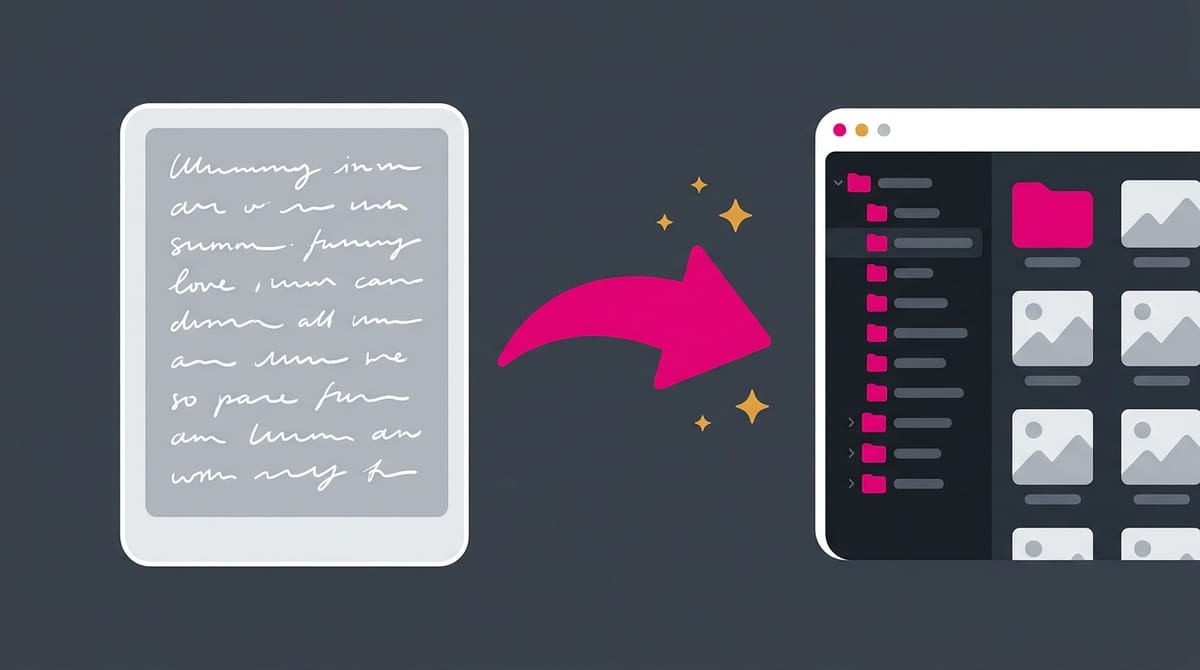
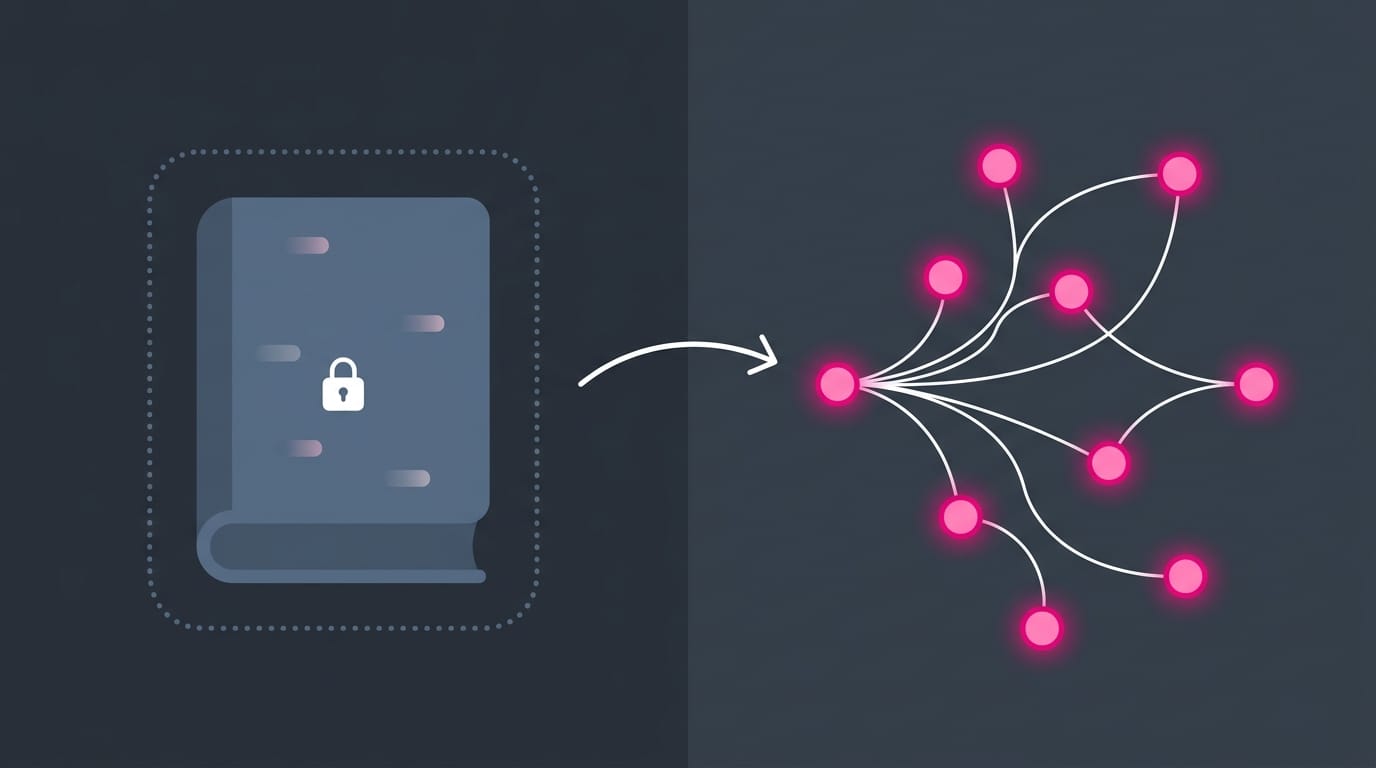
The point here is simple: isolated notes are dead notes. Notes that stay on paper, on a device, or in a system outside your knowledge base are nearly wasted effort. You don't want to have to go back to a book to find your discoveries and thoughts about it. You want those ideas in your system, your single source of truth, ready to be used.
Step 3: Convert to Markdown
Once the handwritten pages are in my vault as images, the next step is converting them to searchable, editable text. I built the Transcriber plugin for Obsidian for this. It uses AI to convert handwritten images into Markdown, and even generates Mermaid diagrams from hand-drawn sketches.
After this step, I have all my book notes in digital, structured form. But they're still one big block of text. That's not useful yet. The real work starts now.
Step 4: Decompose Into Atomic Notes
This is the step where most people get stuck, and where most of the value is created.
A book is a set of concepts, ideas, and thoughts presented in a linear order chosen by the author. But the underlying structure of those ideas is NOT linear. It's a graph. Concepts relate to each other in multiple directions, not just sequentially.
When you decompose a book into atomic notes, you're recovering the underlying graph from the author's chosen sequence. Each idea becomes a node. Each connection between ideas becomes a link. You go from a linear reading experience back to the interconnected structure of the knowledge itself.
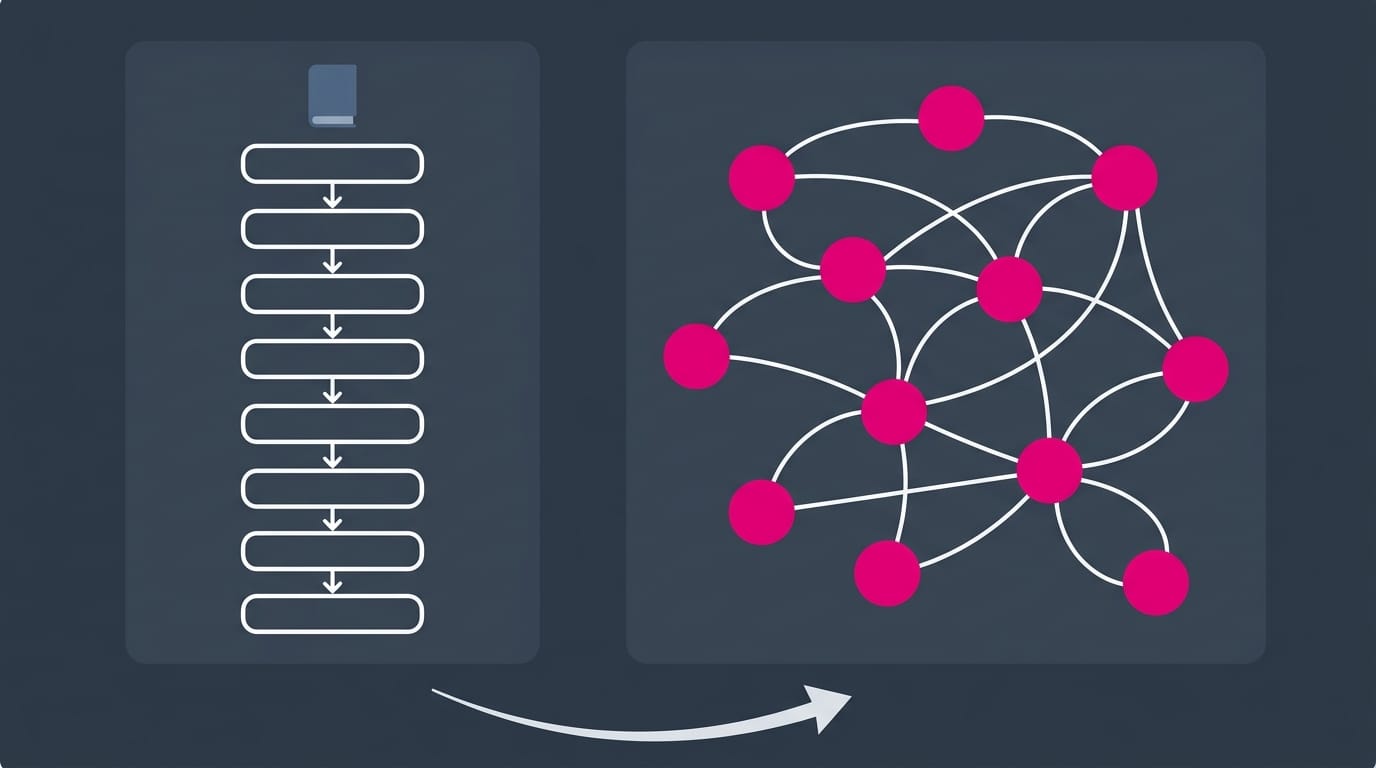
So how do you decide where one idea ends and another begins? The basic test is: can you identify links from this idea to other ideas? To other ideas in the same book, and to notes you already have on other topics? If yes, it probably deserves its own note.
This means that someone with a richer knowledge graph will naturally extract more atomic notes from the same book than someone just starting out. A beginner might see three standalone ideas where an experienced note-maker sees ten, because they can see more connections. And that's fine. This is a skill that develops with practice.
There are also other useful questions to ask yourself, which I described in How to create better atomic notes: What can I do with this idea? What other ideas does this validate? What does this contradict? Could this idea change by taking a different point of view?
Step 5: Connect to Your Knowledge Graph
Once you have atomic notes, the next step is connecting them. To each other, and to the rest of your Personal Knowledge Graph.
This is where the real leverage appears. You connect ideas from different books, different domains, different periods of your life. An idea from a book about habits might connect to something you learned about neuroscience three years ago, which might connect to a project you're working on right now.
That cross-pollination is NOT possible when notes remain embedded in the linear structure of a single book. Or trapped in book margins. Or sitting on a device somewhere. This is exactly why you need a single source of truth for your knowledge.
And I strongly believe that this is where atomic notes shine. Because they're composable. Each one is a building block that can be reorganized, linked, or expanded. Like LEGO blocks. Over time, your graph grows, and each new note has more potential connections. The system gets more valuable the more you use it.
Step 6: Turn Actionable Ideas Into AI Skills
Now we get to the most exciting step: turning passive knowledge into active tools.
When you have a graph of connected knowledge, you can identify ideas and concepts that are actionable. Things you can actually DO something with. Knowledge is knowing something. Wisdom is applying it.
Here's an example. Atomic Habits describes the concept of building the simplest version of a habit to integrate a new behavior into your life. That's an actionable idea. You want to apply it whenever you want to acquire a new habit, a new way of working, a new routine.
So you turn it into an AI skill. You tell an AI agent: "Read my notes about atomic habits and the closely related concepts. Now create a skill that helps me acquire a new habit more efficiently. The skill should give me advice about how to start, what the simplest version of the habit is, and what the next steps would be." Even with this simple definition, the resulting skill would be quite useful.
Notes are passive. They sit in files waiting to be found. You have to remember they exist, find them at the right moment, and figure out how to apply them. That's three friction points too many. AI skills are active. They show up when relevant and apply frameworks to your actual problems.
The conversion from notes to AI skills is straightforward. You can ask any AI agent to generate a skill from whatever text or notes you have. It's up to you to guide it so that the skill makes sense and is actually useful. But the heavy lifting? The AI handles that.
And the skills from different books compose together. A writing skill from one book can combine with a persuasion framework from another and a structural thinking model from a third. Each book you process adds new capabilities to your system. This is what Agentic Knowledge Management looks like in practice.
The Full Pipeline, Summarized
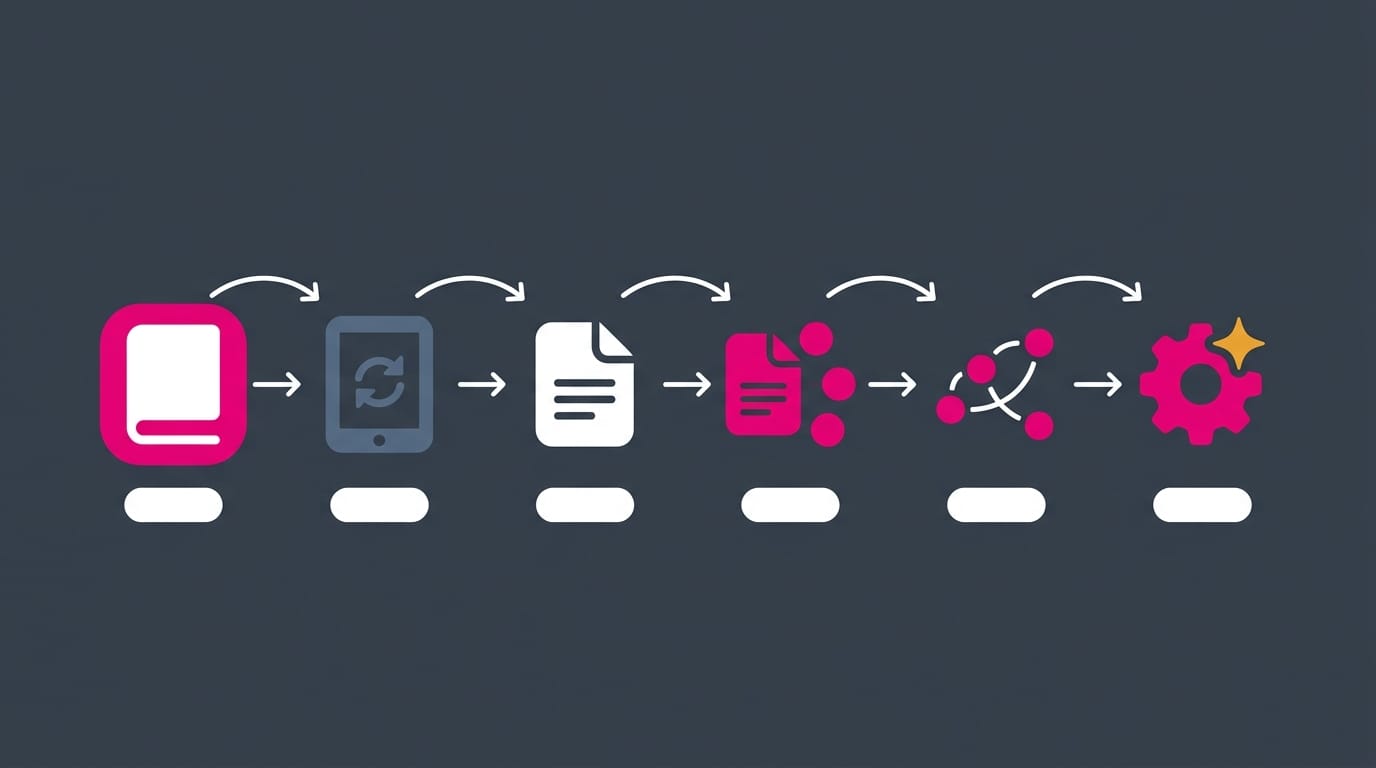
Here's the complete flow:
- Read a book and take handwritten notes (on paper, reMarkable, or any device)
- Sync the notes into your vault (using reMarkable Sync or manual import)
- Convert handwritten pages to Markdown (using the Transcriber plugin or similar)
- Decompose the text into atomic notes, one idea per note
- Connect each note to your existing knowledge graph
- Extract actionable ideas into AI skills that your AI assistant can use
Each step builds on the previous one. Skip the integration step, and your notes die in isolation. Skip the decomposition, and you can't connect ideas across domains. Skip the skill extraction, and your knowledge stays passive.
The whole pipeline compounds over time. Each book makes your system more connected, and each connection makes the next book easier to process.
Going Further
If you want to build this kind of system yourself, here are some resources:
- My Obsidian Starter Kit gives you a ready-made vault structure that supports atomic notes, linking, and all the organizational patterns I use
- The reMarkable Sync plugin for Obsidian is open source on GitHub
- The Knowledge Worker Kit covers the broader knowledge work system, including how to maintain and grow your knowledge graph over time
- Join the Knowii Community to connect with others who are building knowledge systems and exploring AI integration
- The AI Ghostwriter Guide shows how to build an AI assistant that knows your voice and expertise, a related capability that composes well with skills
- My free public notes include thousands of examples of atomic notes and connected thinking in action
I've also written related articles that go deeper into specific parts of this pipeline:
🔗 Why you should take notes while reading non-fiction books
🔗 I Built an Obsidian Plugin to Sync My reMarkable Notes
Conclusion
The gap between reading a book and actually using what you learned is real. Most people feel it. You read something great, you take some notes, and then... nothing happens. The ideas fade.
This pipeline closes that gap. Not by being faster or easier, but by being complete. Every step has a purpose: capture ensures nothing is lost, syncing bridges analog and digital, conversion makes notes searchable, decomposition makes them connectable, linking creates leverage, and skill extraction makes knowledge actionable.
The biggest shift for me was realizing that marginalia is not knowledge management. Highlighting and scribbling in margins feels like progress. But unless those ideas make it into your system, connect to other ideas, and eventually become tools you can use, they're just marks on paper.
Analog reading. Digital knowledge. That's the whole idea.
Start with one book. Get those notes into your system. Break them into atomic pieces. Connect them. And when you find an idea that's actionable, turn it into an AI skill.
You'll see the difference immediately.
That's it for today! ✨
About Sébastien
I'm Sébastien Dubois, and I'm on a mission to help knowledge workers escape information overload. After 20+ years in IT and seeing too many brilliant minds drowning in digital chaos, I've decided to help people build systems that actually work. Through the Knowii Community, my courses, products & services and my Website/Newsletter, I share practical and battle-tested systems.
I write about Knowledge Work, Personal Knowledge Management, Note-taking, Lifelong Learning, Personal Organization, Productivity, and more. I also craft lovely digital products and tools.
If you want to follow my work, then become a member and join our community.
Ready to get to the next level?
Since you're interested in Obsidian:
- 🚀 Obsidian Starter Kit — Skip weeks of setup with 40+ templates
- 🎬 Obsidian Starter Course — Master Obsidian in 2+ hours
- 📚 KM for Beginners — 10+ hours of structured video lessons
- 🎯 Join Knowii — Community + ALL courses & tools
Found this valuable? Share it with someone who needs it.