Unlocking Founder Success: The Essential Guide to Journaling for Business Growth

Discover the transformative power of journaling for founders, unlocking creativity, strategic insight, and personal growth to propel your business forward.

Unlocking Founder Success: The Essential Guide to Journaling for Business Growth
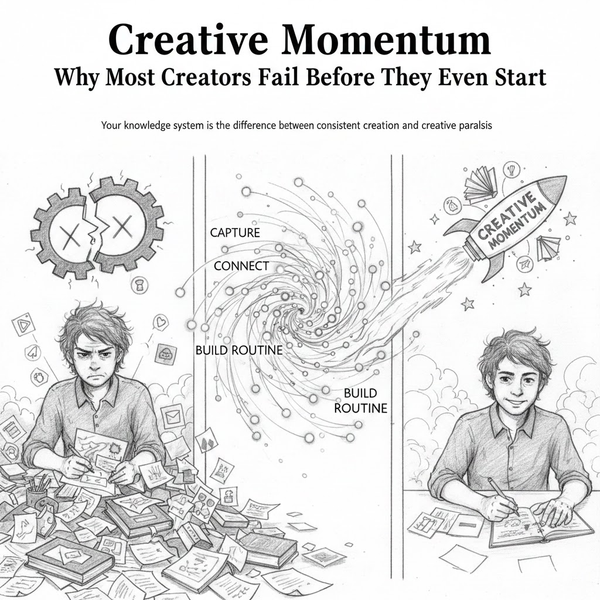
Journaling is a growth enabler for founders. Don't underestimate it. It's not only about personal development. Far from it! Image generated using DALL-E

Founders can benefit a lot by adding journaling to their daily routine. Here's why and how. Don't underestimate the potential impact of this practice.

Introduction

Being a founder is not for the faint of heart.

As founders, we have a lot on our plate. We come up with the initial vision for change we want to see in the world. We then need to carry that vision with us, express it clearly, help others share it, etc. Most importantly, we then need to turn that vision into reality. There are many pitfalls along the way, countless opportunities to give up, and a gazillion steps to take to reach our goals.

I believe that journaling is a habit that is really underrated. It can be hugely beneficial for founders in particular, but for everyone else as well. Although, in the rest of this article, I'll focus specifically on founders.

Why all founders should write a journal

As I have explained in previous articles, adding journaling to your daily habits has many benefits. There are obvious benefits for most, but I would argue that there's even more for founders.

Journaling enables taking distance from events and analyzing/thinking about those objectively. By taking notes daily, you can capture facts about various events (e.g., meetings, feedback from customers/prospects, problems with your plans, bugs, outages, clashes between team members, etc). Taking distance is hard to do when we're alone with our thoughts. Especially "in the moment". It's always best to take a step back and take distance from our emotions. This is much easier to do when writing things down. A journal is perfect for doing that.

As a founder, you need to think strategically, considering many dimensions. Evolving markets, technological changes, people turnover, opportunities, etc. Each step you take needs to move the needle forward. Journaling can be a great tool for thinking strategically, as it enables capturing and putting the key elements you need to consider all in one place. Thinking strategically is also key for making important decisions. Journaling can help you evaluate the pros and cons of different choices, and help you make the right decisions.

By writing in your journal each day, you can create a valuable resource that you can dig into whenever you need to understand what the past looked like or what lead you where you are now. This enables reflecting and being objective about the past. That's not something we humans are very good at without a fact-based log of what happened before.

Thinking is important, but action is everything to us, founders. Journaling can help you plan your work ahead of time. Establishing habits to plan your days ahead can make or break your projects. Your journal can be a key part of your productivity and focus system. This habit is especially beneficial when combined with periodic reviews.

Why You Should Perform Periodic Reviews for Productivity
Discover how to leverage periodic reviews to achieve your goals and get more out of your life

Beyond the strategic and tactical decisions you need to make every day, there are also issues and problems to solve, ideas to capture, and various events of interest that you need to capture and keep track of. Journaling is a great place to capture issues, problems, ideas, etc. By capturing those, you will then be able to analyze/dissect each specifically.

Last but not least, keeping a journal can help you better manage your relationships (professional or otherwise). You can keep track of the people you meet, the people you'd like or need to meet next, etc. This can help you strengthen strategic relationships, which can help you stay on top of the mind of the right people, and increase your luck surface.

In practice, your journal can become the operations center of your thinking and decision-making.

How to approach journaling as a founder

Now that you have an idea about the why, let's explore the how. You're in luck, it ain't that complicated.

Find Your Perfect Note-Taking app with this Free Database of ~300 Tools for Thought
Discover the Ultimate Database of ~300 note-taking and Personal Knowledge Management Tools.

The first step for journaling is to pick a note-taking application. Any will do, although I tend to recommend Obsidian for its performance and versatility. If you don't want to waste time, take a look at my starter kit. It provides a solid starting point. Not only for journaling, but for knowledge management in general.

Obsidian Starter Kit and community
Who is this for?You are just getting started with note-taking or you’ve recently switched to ObsidianYou wonder how to take smart notesYou want to know how to properly organize your notes and avoid creating an overwhelming messYou want a solid system that scalesYou wonder what Zettelkasten, the PARA method, and the Johnny decimal system areGetting started with Obsidian is not the hardest thing in the world, but it takes a lot of trial and error to figure out how to structure and organize your knowledge base. You have a busy life, and you don’t want to spend weeks or even months figuring out the “right” approach.What is this?I’ve been passionate about information, knowledge management, and PKM for more than 20 years. As an author, blogger, knowledge worker, and entrepreneur, I needed solutions to store and organize an enormous amount of information.Over the years, I’ve explored, used, and advocated many tools but have been using Obsidian extensively since 2020. With the Obsidian Starter Kit, I offer you the result of my own research and experimentation. It’s like a cheat code to jump straight to stress-free note-making.I’ve spent months refining and perfecting my Personal Knowledge Management (PKM) system, and have spent countless hours tweaking my system. I’ve published a few articles to share some ideas about this. My system combines the Zettelkasten approach, the PARA method, the Johnny decimal system, and other ideas to create a solid basis for my work as an author, blogger, and content creator.The Obsidian Starter Kit is a ready-made Obsidian vault that includes my recommended organization system and plugins, as well as example notes to help you get started. It also comes along with a user-friendly guide.What’s included?If you buy access to the Obsidian Starter Kit, you’ll get:The Obsidian vaultA comprehensive and solid structure with support for Journaling and ZettelkastenLeveraging the PARA method and the Johnny Decimal systemMany recommended plugins to boost productivity and automate actionsA clear system for Journaling, Meeting Notes, Periodic reviews, etcMany templates to improve consistency and productivityA powerful dashboardMaintenance notes (e.g., find duplicate and orphaned notes)Automation rulesMany examplesThe user guideLifetime access to the Personal Knowledge Management community for support and knowledge sharingIn addition, you’ll also get free access to all future updates. Over time, I’ll expand it step by step to include tutorials about the various aspects; from exploration/curation to summarization and reuse.What’s in the user guide?The user guide is a growing and evergreen knowledge base about how to take smart notes. It includes:Installation instructions.Details about the contents of the Obsidian Starter Kit (i.e., Obsidian vault structure, key design principles, included plugins, etc.)A clear overview of Obsidian and its core concepts (everything you should know and care about)Clear explanations about...The Zettelkasten methodAtomic notesProgressive summarizationThe PARA methodThe LIFT principleThe Johnny Decimal systemJournalingMaps of Content (MoCs)Periodic reviewsWhy and how to tag notesTemplatingThe Markdown syntaxWhy you need a single source of truth for everythingThe collector’s fallacyThe Inbox Zero principleHow to capture informationHow to capture quotesHow to capture information about persons of interestHow to extract knowledge from daily notesHow to save mental contextsObsidian tips and tricksWhat’s in the video course?The Obsidian Starter Course is a video course (~2h20) of content covering:Obsidian: installation, user interface, key features, plugins, automation, tips and tricks, etcThe Markdown syntaxYAML metadataPersonal Knowledge Management techniques and principles: the Johnny Decimal system, the PARA method (e.g., the Zettelkasten method, the LIFT principle, Atomic notes, Maps of Content, knowledge capture & extraction, etc)JournalingPeriodic reviewsTemplatesAutomationTask managementBest practices and recommendationsHands-on explanationsand more!Evergreen contentThe user guide of the Obsidian Starter Kit is expanding day after day, week after week. It will soon include:More theoryDetailed processes (e.g. when to take notes, how to use Zettelkasten in practice, daily notes, periodic reviews, ...)Additional how-to guidesMore tips and tricks...The Obsidian vault also evolves over time:The structure improvesNew templates are addedNew plugins are addedetcRefunds policyIf you’re not 100% satisfied, then just let me know, and I’ll issue a full refund. I’ll only ask you a single question: How can I improve the product?If you think about asking for a refund, then consider reaching out to me with your issues, questions, and remarks. I’m always available and happy to help. My goal is to help you succeed.Testimonials”Finally clickeđ how awesome @Obsidian is! Thanks to your excellent Obsidian Starter Kit!”— Cal Desmond-Pearson (@CalSocialHermit)“Off and running w/ @obsdmd. I’ve installed the app & have @dSebastien Starter Kit & my own fresh start Vault open. Learning from former & putting into practice w/ real content in latter. So far, so good”— Raymond D Sims (@rsims)“Great content - got me up to speed with what I was looking for fast ! Sébastien answered some questions by mail also which was much appreciated ! Thanks”— Sam Gonzales”As someone who has bounced around trying to find the right Knowledge tool, I’ve realized that many of my issues have been related to the complexity of the tools and the processes. The structure, design and explanations provided in the Obsidian Starter Kit have finally given me the foundation I’ve needed. 100% worth it”— Michael Aaron (via e-mail)“I absolutely love your kit and it has been so immensely helpful”— Ashwin Appiah (via e-mail)“Thanks for making the product. I’m making efforts to start using Obsidian more in my daily workflow and having a place to start makes the task much less daunting!”— Liam Weight (via Twitter DM)“I’m very new to PKM, but the Obsidian Starter Kit has been a tremendous help in getting me started”— Fredrik Nordström (via the PKM community Slack)“Sebastien’s Obsidian Starter Kit is a powerful tool for those looking to dive into the world of Obsidian without being overwhelmed. It’s a comprehensive solution that significantly shortens the learning curve, providing an impressively structured way to start capturing notes and facilitating daily journaling. The kit’s integration of automated tasks and pre-designed templates are a boon to beginners, alleviating the initial intimidation of starting from scratch. If you’re new to Obsidian and need a solid starting point, this starter kit comes highly recommended. It doesn’t just help you navigate Obsidian, but also empowers you to harness its full potential right from the get-go.”— Lubos KolouchFredrik (via the PKM community Slack)“Just to thank the work and content that allowed me to discover the background of a custom vault. It was a real boost for me and given the price, it was a real investment of time and learning.”— Trobrillant

At the start of each day (or at the end of the day before), you need to create a daily note. I personally use the date as the name of the file: 2023-06-27.md. Within that note, use a stable structure to capture your task list, what you've achieved, your discoveries and notes of the day. Here's the structure that I currently used and shared previously. Note that it's also part of the starter kit I've mentioned above:

Plan for today

Notes of the day

Done today

Discovered today

Gratitude

Using the date as filename is useful as it makes it a breeze to find back your notes about a specific date in the past. I use the Periodic Notes plugin included in the starter kit to ease the process.

Throughout the day, you should keep your daily note open. That way, you can easily update it whenever you need, in order to capture whatever is relevant.

You can use the "Notes" section to jot things down and do quick analysis. You can also use that section to capture important events, ideas that popped in your mind, meeting notes and more.

You can use the "Discovered today" section to capture whatever you found interesting/note-worthy. For instance, things you've learned, changes in your environment, in the market you're operating in, etc. This can help you capture the essence of what will influence your future decisions.

Don't worry too much about extracting information into separate notes, as that will just eat up your time and take your focus away from what really matters. If needed, you can always extract information later on. For instance, during periodic reviews, as I've explained in another article.

How I use daily notes
An overview of how I use daily notes and how I extract knowledge from those.

Taking those notes each and every day will help you maintain a log of the evolution of your thinking, your business, and your life. Whether you want it or not, those are all intertwined, for the better or for the worst. Noticing when your personal life interferes with your work or vice-versa is very useful to be able to adjust course and restore balance.

Knowii - Journaling Deep Dive
What is this?This is an workshop about Journaling that was recorded in the Knowii Community. Check out the full list here.During this masterclass, we’ve dived deep into the practice of journaling, covering both theory and practice.🚀 Join Knowii as a Knowledge Builder or Knowledge Master and get this workshop PLUS all other recordings, future live events, exclusive community access, and SO much more!You know that feeling when someone asks “What did you do this week?” and you just... blank?I used to reach the end of months feeling like I’d been busy all the time but couldn’t point to anything meaningful I’d accomplished. Worse, beautiful moments with my family would slip away, forgotten in the rush of daily life.That changed when I started treating my journal not as a diary, but as my personal “operating system”.Here’s what I discovered (and what you’re probably losing right now)Every single day, you have moments of clarity, breakthrough ideas, and experiences that could fuel your growth for months. But your brain literally can’t hold onto most of it.Right now, you’re losing: Those “aha!” moments that hit you in the shower or during your commute Insights from conversations, podcasts, books or articles you read that could change how you approach your work Small wins that prove you’re making progress (even when it doesn’t feel like it) Beautiful moments with people you love Clarity about what actually matters vs. the noise Without a system to capture this stuff, it just... disappears. Forever.Why most journaling advice doesn’t work (and what I do instead)Most people think journaling means writing “Dear Diary” entries about their feelings. That’s not wrong, but it’s missing the real power.I use journaling as the foundation of how I organize my entire life. It’s where I: Capture ideas before they vanish Track progress on what matters Hold myself accountable to my goals Process experiences to learn from them Build a knowledge base that grows over time Find balance between work and leisure Remember what matters This isn’t theory. I’ve been refining this system for over a decade while managing multiple jobs, my company, writing books/articles/newsletters, building and growing communities, developing software, ... It works crazy well. It scales well. And it helps me strive while staying stay sane. It brings clarity, focus, peace and joy to my life.What you’ll learn in this deep diveWhy your brain works against you (and how to work with it instead)I’ll show you the science behind why we forget so much, and how simple journaling techniques can hack your memory and decision-making.The complete system I actually use Daily notes that take a few minutes here and there but change everything “Interstitial journaling” to capture insights without breaking flow Weekly, monthly, and yearly reviews that compound your growth and knowledge How to hold yourself accountable without feeling guilty Ways to preserve beautiful moments you’d otherwise lose ... Real tools and workflowsYou’ll see inside my actual system. I’ll show you exactly how I set up my daily notes, what I capture, questions I ask myself, which tools I’m using, and how everything connects.How it all fits togetherThis isn’t just about journaling in isolation. I’ll show you how it becomes the foundation for better productivity, clearer thinking, and a more intentional life.Who this is forThis will resonate if you: Feel busy all the time but struggle to see your progress Want to be more intentional about how you spend your time Have great ideas that you forget before you can act on them Wish you could remember and build on your experiences Are tired of feeling like life is just happening to you It doesn’t matter if you’ve never journaled before or if you’ve tried and given up. This approach is different.What’s includedWhen you get this workshop, you’ll have: 80-minute video recording where I walk through the complete system live The full system visualization I used during the presentation: a comprehensive diagram showing how everything connects (this alone took me days to create) Complete show notes with the session agenda and key takeaways Access to the knowledge base (hundreds of interconnected notes) from my personal knowledge system: every single concept, method, and technique I reference gets you a direct link to the full explanation, connected to many other ideas that you can dive into if you’re ready to go further (e.g., about Personal Knowledge Management) Real examples from my actual daily, weekly, and periodic notes (anonymized but authentic) You’re getting the keys to my entire knowledge base, the foundation of my own system.Why I’m sharing thisI genuinely believe that most people are living below their potential. Not because they lack talent or drive, but because they lack systems to capture and build on their experiences.I’ve been fortunate to think about sustainable and scalable systems for many years. First for designing a life I love. Second, through my work as a system engineer, software developer and solution architect. But also as an entrepreneur, applying my approach to diverse challenges such as creating/growing my own company, building startups, writing books, articles, newsletters, knowledge systems, ... None of that happened by accident. It happened because I developed systems to stay clear on what matters, track my progress, and learn at every step.Journaling is the foundation of all of it.If you’re ready to stop living in reactive mode and start building something intentional, this workshop will show you exactly how to begin.Here’s a Visual overview of the presented system:While exploring this complete system, I have discussed: The journaling practice The problems it addresses & its benefits The approach I recommend What it looks like in practice How this approach relates/integrates with... Knowledge Management Knowledge Work Learning Personal Organization Productivity ... How to get started How to develop your own practice Tools you can use ... Visual overview of the topics:Example ResourcesHere are some of the resources that have been explored during this workshop. Feel free to explore ❤️ Angles to consider when thinking about the value of a journal Benefits of journaling Elements of a journal How to find inspiration for journaling How to get started with journaling Journaling prompts Knowledge Graph (KG) Knowledge Ingestion Process Knowledge rollover through Periodic Reviews Morning pages My Template for Daily Notes Periodic reviews Personal Knowledge Management System (PKMS) Process for transitioning information from analog to digital Template I use for periodic notes The power of journaling for people with ADHD The relationship between Journaling, Personal Health, and Growth The value of going from analog to digital Time Horizons Tools for Thought (TfTs) Why and How to Combine Journaling, Learning and Knowledge Management What Are Daily Notes Useful For Why knowledge centralization matters Why use daily notes as your capture system Why you should link your notes with time My articles about journaling: https://www.dsebastien.net/tag/journaling TestimonialsBig thanks. Truly deep. Truly useful. You nailed why journaling works — Julien Dambron

As part of your daily notes, you can also use the "Plan for today" section to define your highlight for the day (i.e., the most important goal of the day), and additional tasks to perform. Keeping that task list in sight throughout the day can help you focus your attention on what really matters. I personally use the Rollover Daily Todos plugin of the Obsidian community to keep unfinished tasks in sight. It's one of the plugins that I have included in the starter kit.

Obsidian Starter Kit
Jump straight to stress-free note-making with Obsidian

Moreover, if you perform regular periodic reviews (e.g., weekly reviews), you will be able to take a step back and evaluate your situation more objectively. By looking at the daily notes of the week you'll get a clear view about:

  • What you planned to work on
  • What you have actually achieved
  • What challenges/problems you faced
  • What you have discovered/learned along the way
  • What you have been thinking about, which ideas you captured
  • ...
Periodic reviews for a happier and more productive life
Discover how to leverage periodic reviews to achieve your goals and get more out of your life

All this information forms the basis upon which you can evaluate your work, your approach, be more realistic/objective about the past and the future. It can help you set better/more achievable goals, adjust your mindset or approach, and most importantly, make better and more informed decisions.

Keeping it all organized will free your mind. Image generated using DALL-E

Regarding customers and relationships, you can keep track of the people you've met, list those you need to meet in the coming days/weeks, and prepare accordingly. For instance, if you know that you'll meet potential investors in the coming days, you can prepare the meeting ahead of time, think about arguments you can use, etc. You can actually go further and create a powerful relationships management solution on top of your knowledge base, but that's a topic for another day!

Conclusion

As founders, we have countless things to think about and ponder. Our brains are not ideal for that. Luckily, there are better options out there. Using modern tools for thought, we can augment our capabilities and think deeper and to be strategic.

If you are a founder, then don't underestimate the impact that journaling and Personal Knowledge Management (PKM) can have on your success. When combined together, journaling, PKM and periodic reviews can become the operations center of your thinking, decision-making and productivity.

In future articles, I'll explain how you can actually combine journaling, a personal knowledge base and modern AI solutions to go even further.

About Sébastien

I'm Sébastien Dubois, and I'm on a mission to help knowledge workers escape information overload. After 20+ years in IT and seeing too many brilliant minds drowning in digital chaos, I've decided to help people build systems that actually work. Through the Knowii Community, my courses, products & services and my Website, I share practical and battle-tested systems. You can follow me on X 🐦 and on BlueSky 🦋.



I am an author, founder, and coach. I write books and articles about Knowledge Work, Personal Knowledge Management, Note-taking, Lifelong Learning, Personal Organization, and Zen Productivity. I also craft lovely digital products.


If you want to follow my work, then become a member and join our community.


Ready to get to the next level?

If you're tired of information overwhelm and ready to build a reliable knowledge system:


Subscribe to the Newsletter 💌