
Your AI Doesn't Know You: Why PKM Is the Missing Foundation for AI Agents
Most AI agents are flying blind. They have no memory, no context, and no idea who you are. Here's why your knowledge base is the missing piece.

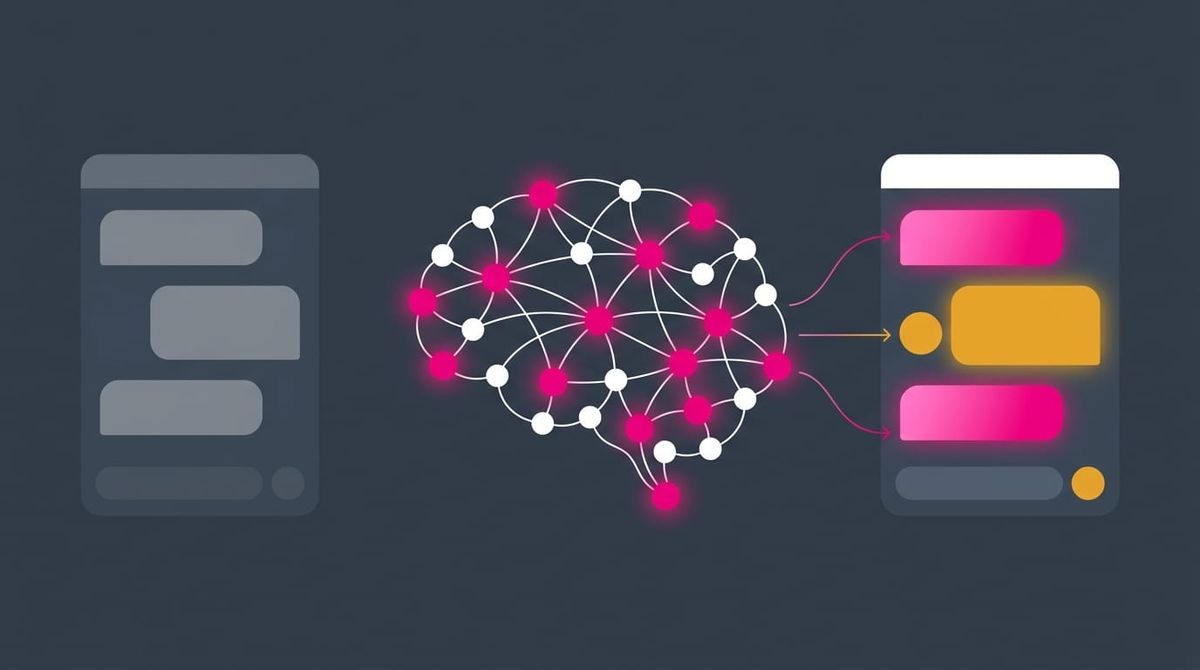
Most AI agents are flying blind. And most people building them don't even realize it.
In this article, I want to explain why your AI is giving you generic results, and why the solution isn't better prompts or fancier prompts or frameworks. It's something much more fundamental: having knowledge base.
📬 If you enjoy this, subscribe to my newsletter for more tips on AI, Knowledge Management, and (Zen) Productivity.
Introduction
Everyone's building AI Agents right now. X is full of demos. GitHub is full of frameworks and tools. The list grows every week and it's 100% overwhelming. Most also quickly get replaced or die.
But most of these agents start every single conversation from zero. They have no idea who you are, what you care about, what you're working on, or how you think. They're powerful tools with amnesia.
That's like hiring a brilliant consultant who forgets everything about you between meetings. Every. Single. Time.
I've been building a different kind of AI system. One where agents live inside my knowledge base, operate on years of structured personal knowledge, and actually get better over time. I strongly believe that this approach is where AI agents are inevitably heading.
TL;DR
Your AI is only as good as the context you give it. Most people give it almost nothing. Here's what you need to know:
- AI agents without context are just "clueless" chatbots
- Better prompts don't fix the fundamental problem: lack of knowledge & context
- Context Engineering matters a lot; Prompt Engineering not so much
- There are multiple Levels of AI Context Management; most people are stuck at the weakest stages
- A structured knowledge base (Personal Knowledge Management System (PKMS)) is the foundation that makes AI agents actually useful
- Your notes should contain the context AI needs: your goals, projects, beliefs, writing style, decisions, daily reflections, ...
- Without structure (clearly-defined note types, tags, folders, metadata), AI can't navigate your knowledge efficiently
- The more structured knowledge you have, the more powerful your AI becomes
- This is NOT about replacing your thinking. It's about amplifying it with YOUR knowledge
The Problem: AI Without Context
Let me explain why this matters.
Open any AI chat. Ask it to help you write an article. What do you get? Generic advice that could apply to literally anyone on the planet.
Now imagine if that AI knew your writing style from what you have written before. Knew your customers/audience from your notes. Knew your beliefs and values from your Personal Manifesto. Knew what you're currently working on from your daily notes and tasks.
Completely different results, right?
Context Engineering is the discipline of providing the right information, in the right format, at the right time, to give an LLM everything it needs to accomplish a task. It's not about crafting the perfect prompt. It's about building the right system on top of the model.
The 8 Levels of AI Context Management
I've been thinking about this for a while, and I see a clear progression in how people provide context to AI. I call these the Levels of AI Context Management:
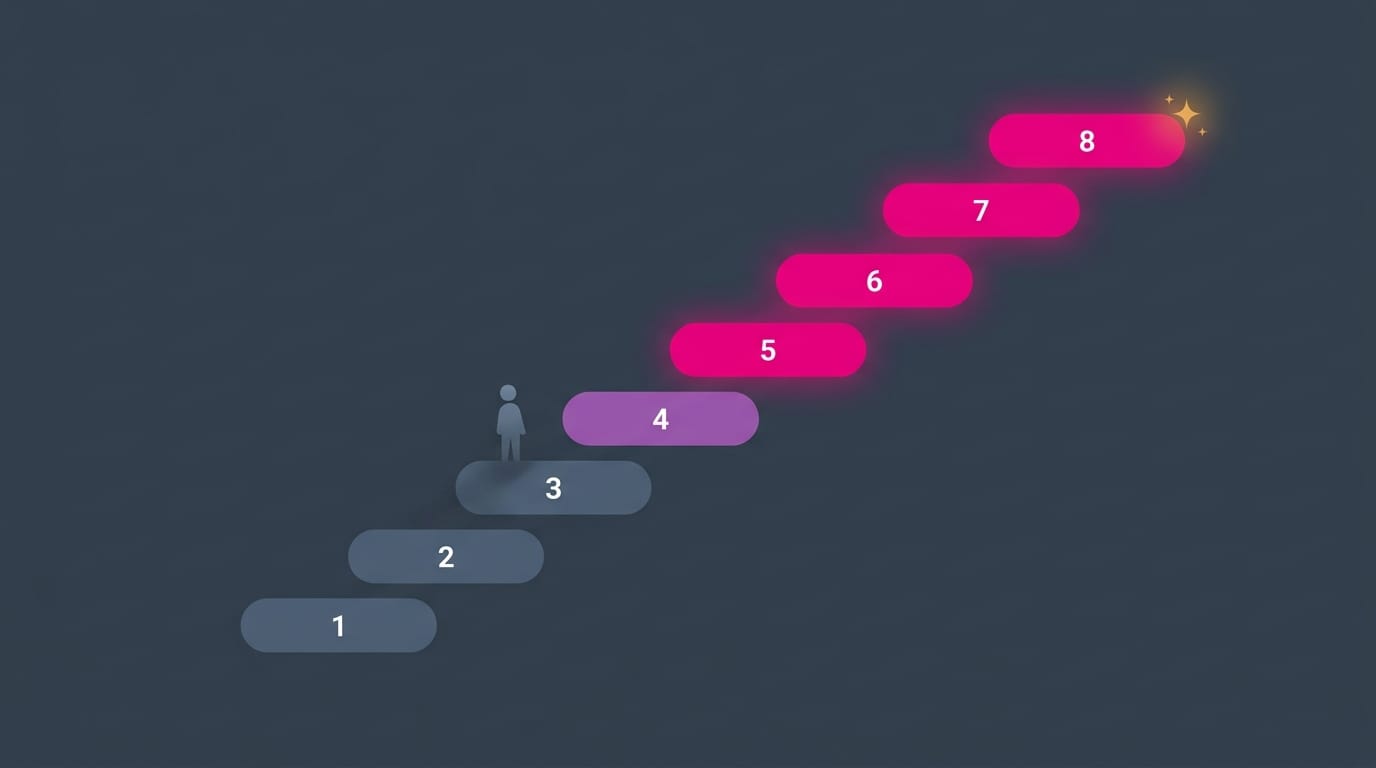
Level 1: No context. You ask AI a question. It gives you a generic answer. This is where most casual users are.
Level 2: Basic context. You add some context to your prompt. Better answers, but you keep repeating yourself every session.
Level 3: AI built-in memory. Tools like ChatGPT and Claude remember bits from past conversations. Better, but unreliable and out of your control.
Level 4: Magic prompts. You learn Prompt Engineering techniques. Quality improves, but managing prompts becomes its own problem. And you're still repeating yourself constantly.
Level 5: Advanced context management. You point AI to a knowledge system. Now it gets a much better picture of what you need. Quality increases drastically, but there's still a lot of variability.
Level 6: Managed AI memory. You have a knowledge system AND a memory system where AI stores and retrieves memories. You control and curate those. Variability reduces.
Level 7: Skills. You build AI Agent Skills on top of your knowledge and memory systems. AI now knows exactly HOW you want things done. Results become consistent across different tasks.
Level 8: AI-ready knowledge system. The full picture. Your knowledge base is structured so AI can navigate it efficiently. It's not just using the information; it's enriching it over time. Your second brain is now also your AI's brain.
Most people are stuck somewhere between Level 2 and Level 4. They think better prompts will solve the problem. But you can't prompt your way out of a context problem. The real leverage is in Levels 5 through 8.
Structure Matters More Than You Think
"But I already have tons of notes!" you might say. Unfortunately, a pile of unstructured notes is almost as useless to AI as having no notes at all. If you ask an AI to help you plan your week based on your goals and current projects, it needs to:
- Find your goals (where are they? what format? how are they tagged?)
- Find your active projects (same questions)
- Understand your current tasks and their priorities
- Know your preferences and work patterns
- Connect all of this together meaningfully
If your notes are scattered across 6 apps, have no consistent naming, no tags, no metadata, and no links between them; the AI is going to struggle just as much as YOU struggle when you try to find something in that mess. Having a Single Source of Truth (SSOT) helps. But it's not enough for AI to find its way efficiently.
Structure isn't just about being organized for its own sake. Structure is what makes your knowledge (efficiently) machine-readable. And machine-readable knowledge is what makes AI agents actually work.
This means:
- Consistent note types with defined properties (a goal looks different from a task, which looks different from a daily note)
- Folder structure that groups related content logically. You may think this is not needed, but at this point in time, it still really helps!
- Metadata that stores structured data about each note (e.g., a description, tags, dates, ...)
- Links that create a knowledge graph of connections between ideas/concepts/topics/...
When your knowledge base has all of this, an AI agent can navigate it like a well-organized library. Without it, the AI is searching through a pile of paper on the floor.
Knowledge Management Is the Foundation, Not the Cherry on Top
People think of Knowledge Management and AI as separate things (or just don't know about the former). PKM is about creating a Fourth place for yourself; a space where you can think, organize yourself, etc. But it's also an enabler for better AI use.
Knowledge Management is actually a valuable foundation that makes AI agents much more powerful.
Without a structured knowledge base, AI agents have nothing meaningful to work with. They're operating on your prompt the model's training data and tweaks made after training by the model makers. That's it. And the model's training data is generic by definition; it was trained on everyone's data, not yours. That's why AI slop exists. That's why it all looks and feels so generic.
With a structured knowledge base, your AI agents can:
- Understand your goals and help you prioritize
- Write content in YOUR voice because they can read YOUR writing style notes
- Review your work against YOUR standards and YOUR values
- Track patterns in YOUR daily notes over months and years
- Make connections between YOUR ideas that you might have missed
- Remember what YOU decided last week and why
- ...
This is AI that actually knows you. And it's far more valuable. And no amount of "automatic" AI memory will fix that.
I've built my Obsidian vault over years. It contains thousands of notes (over 16K as I'm writing this); ideas, beliefs, projects, goals, daily reflections, reading highlights, book notes, writing style guides, content strategy, product catalog, personal history, meeting notes, and much more. When I built AI agents on top of this knowledge base, the difference was night and day. Not because the AI model got smarter. Because it finally had the right context.
The Compound Effect
We also need to discuss about the Compound Effect that this all creates.
Without a knowledge base, whether you use Prompt Engineering techniques or not, whether you use the greatest AI model out there or not, almost everything gets lost between sessions. You chat, you get a response, the context evaporates. Next session, you start from scratch.
Knowledge has to be improved, challenged, and increased constantly, or it vanishes — Peter Drucker
When AI agents "live" in your knowledge base, things are different. They accumulate knowledge over time:
- Every correction you make teaches the system what you prefer
- Every session adds to the agent's memory
- Every note you create adds to the knowledge the agents can draw from
- Shared lessons get recorded for all agents to learn from
This is a first compound effect. The system gets better the longer you use it. Because each piece of knowledge connects to existing knowledge, creating new possibilities for the agents. And you can also ask AI to improve the system itself to better know you needs, your preferences, etc. And the more you do it, the more alignment you get.
And there's a second compound effect. Given the billions of dollars currently invested into AI research & engineering, models keep getting better. And with a system like the one I'm discussing, changing models is almost transparent. You point a different Large Language Models (LLMs) to your knowledge base, and it can directly get to work. And if that model is stronger at reasoning, can manage a larger context window while still being able to retrieve information efficiently, then your entire AI system has just got an upgrade.
What I'm describing here is also what I consider to be a vendor-agnostic AI system; one that is portable, that you own, that you control, and that will always be there. It's a very different value proposition compared to creating ChatGPT projects, Claude projects, or fully relying on any other specific AI tool or platform. This approach gets rid of the inherent vendor lock-in that comes with those.
You can build a mind from many little parts, each mindless by itself — Marvin Minsky
And if you're privacy focused, then this works too. Download a model, run it with something like Ollama or LM Studio, and you're good to go.
What This Looks Like in Practice
Let me give you a concrete example.
I want to write a newsletter. In a typical AI workflow, I'd open Claude, explain what my newsletter is about, how I structure my newsletter editions, describe my writing style, list my products for CTAs, recall what I wrote last week to avoid repetition, and then ask for help. That's 15 minutes of context-setting before any actual writing happens.
In my system, I just start with "let's write a newsletter." The AI knows my writing style (because it knows about my note covering that. It also knows about my content strategy (again, I have a note describing it). It knows abuot my products and services, with the exact links, etc. It knows about my previous newsletter editions (since those are also in the knowledge base), ...
You see where I'm going with this. It can find all of that because the information is already there, and AI knows about it. And it knows all this through AI Agent Skills, context files, AGENTS.md (File Convention), etc. I'll share more practical details in future articles.
Instead of wasting time repeating myself, I can immediately get to work. And the output sounds like me, because it was grounded in my actual knowledge; not some generic model of how newsletters work/are written.
That's the difference between Level 2 and Level 8.
Getting Started
If you're convinced that Knowledge Management is the missing foundation for your AI agents, then you've come to the right place. I'm spending a ton of time exploring all this so you don't have to. I'm a technology enthusiast, so this is pure fun for me.
BTW, we explore these ideas in depth within the Knowii Community. Come join us!
My first piece of advice is to start simple:
- Pick one tool and commit to it. I use and recommend Obsidian because it stores everything as plain Markdown files on my local machine. No vendor lock-in. My data is mine. And it's perfect for AI integration because AI can read and write Markdown natively. See File over app principle too!
- Structure your notes with types and tags. Every note should have a minimum amount of metadata that tells both you and AI what kind of note it is. A goal, a project, a daily reflection, a meeting, ... Each needs a distinct structure.
- Start with daily notes. Write every day. Capture what you're working on, what you learned, what you decided. This becomes the richest context source for AI over time. Explore Interstitial Journaling!
- Add "identity" notes. Write down your values, goals, writing style, beliefs, strengths, weaknesses, etc. These become the "personality files" your AI agents will use to give you personalized results.
- Connect everything. Use links between notes. AI benefits enormously from a knowledge graph; it can follow connections just like your brain does.
The Obsidian Starter Kit includes a world-class starting point with many note types, dedicated tags, templates, automation rules, folder structure, ... It's the foundation I built my entire AI agent system on top of. If you don't want to spend weeks figuring out the structure yourself, it's the fastest way to get to a structured vault that's ready for AI. And it will keep getting better as I iterate. Buy it once, benefit forever.
 Knowledge Forge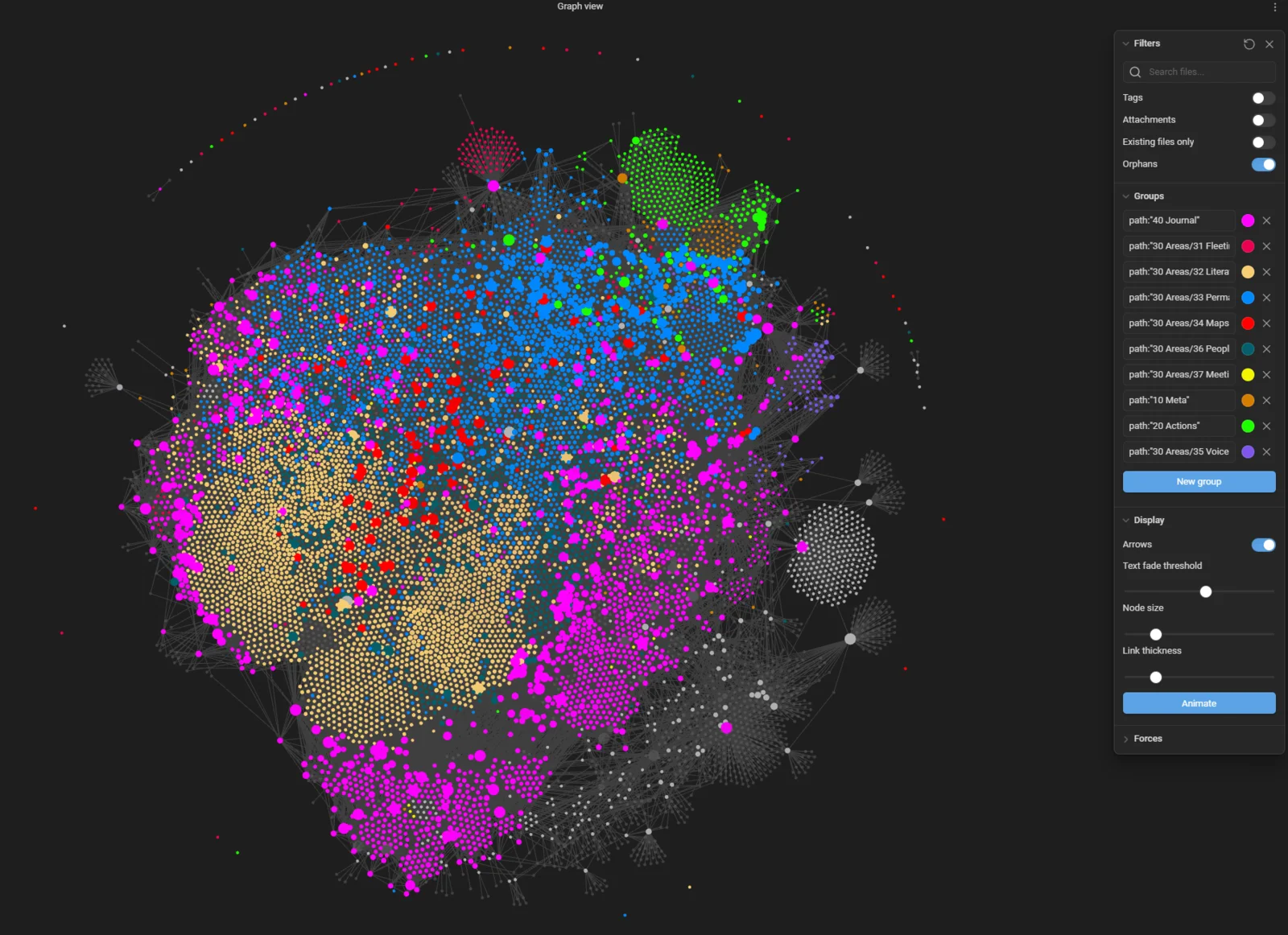
Going Further
This article is the first in a series of three. In the next article, I'll show you the actual architecture of the AI agent system I've built on top of my Obsidian vault: how agents get their identity, how they route requests, how they remember things, and how they work together in panels and teams.
If you want to go deeper right now, join the Knowii Community. It's where I share the behind-the-scenes of building this system, run live workshops on AI and Knowledge Management, and help members build their own knowledge-powered AI workflows. From explorers just getting started to knowledge masters building advanced systems.
 Knowledge Forge
Conclusion
Your AI doesn't know you. And that's the real problem.
Better prompts won't fix it. Fancier prompts and frameworks won't fix it. A bigger model won't fix it.
What WILL help a ton it is giving your AI the one thing it's been missing: structured knowledge about who you are, what you do, how you think, and what you care about. That's the foundation you need.
Your knowledge base is the missing piece. Build it right, and your AI transforms from a generic slop generation machine into something that gets you. Something that gets better every time you use it. Something that compounds.
That's the power of "Knowledge-first AI".
That's it for today! ✨
About Sébastien
I'm Sébastien Dubois, and I'm on a mission to help knowledge workers escape information overload. After 20+ years in IT and seeing too many brilliant minds drowning in digital chaos, I've decided to help people build systems that actually work. Through the Knowii Community, my courses, products & services and my Website/Newsletter, I share practical and battle-tested systems.
I write about Knowledge Work, Personal Knowledge Management, Note-taking, Lifelong Learning, Personal Organization, Productivity, and more. I also craft lovely digital products and tools.
If you want to follow my work, then become a member and join our community.
Ready to get to the next level?
If you're tired of information overwhelm and ready to build a reliable knowledge system:
- 📚 KM for Beginners — 10+ hours of structured video lessons
- 🚀 Obsidian Starter Kit — Ready-made vault with 40+ templates
- 💼 Knowledge Worker Kit — Complete guides + lifetime community
- 🦉 1-on-1 Coaching — Personalized guidance
- 🎯 Join Knowii — Community + ALL courses & tools
Found this valuable? Share it with someone who needs it.