
Interleaving books
Here's why you should read multiple books at once.

Introduction
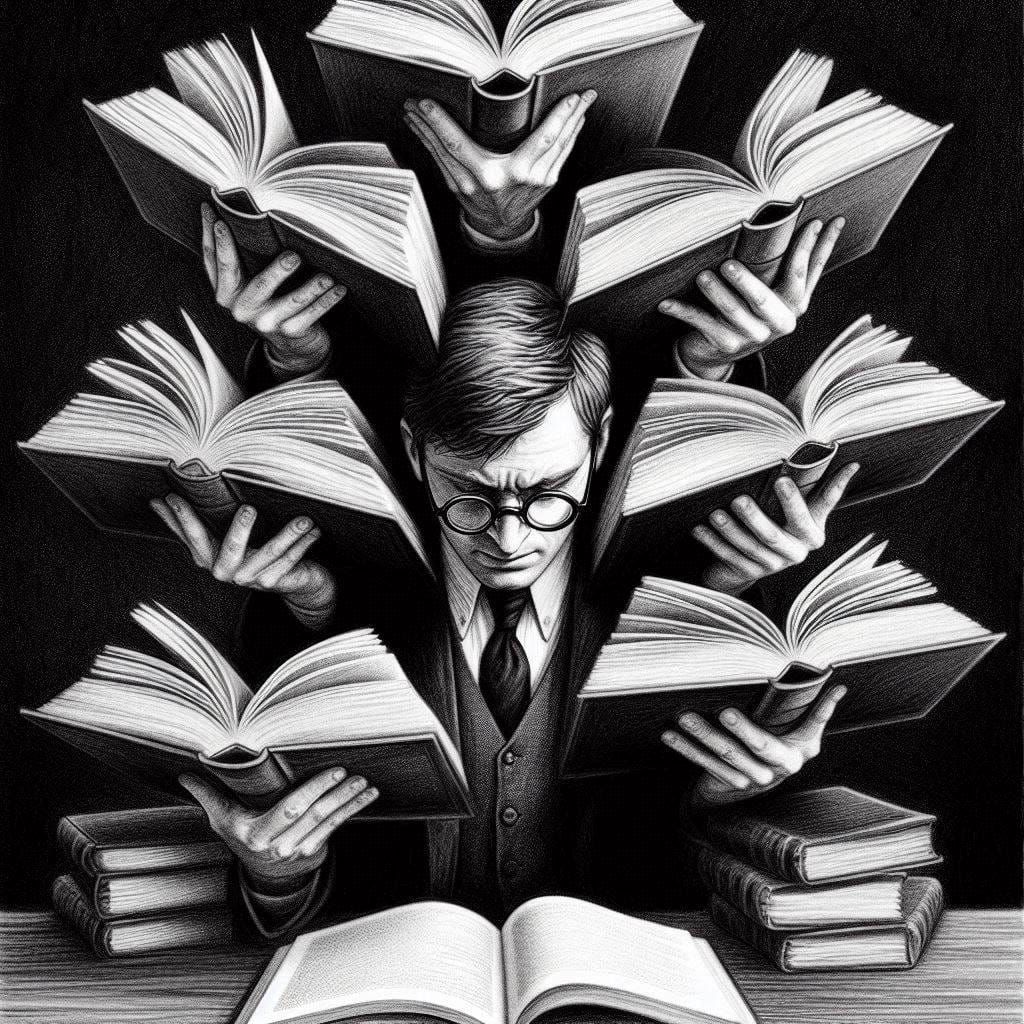
While focusing on a single book at a time, we sometimes get stuck and have to rely on our willpower to continue reading up until the end. But sometimes we give up. This happens for a variety of reasons, good and bad. Some books are dense, hard to read, complex, or simply boring at times (whether you consider fiction or non-fiction ones).
When we slow down to a crawl and stop making progress, we get demotivated. When that happens, giving up the book might be the right decision. But we might also be missing out, and it's not always obvious right away... Worse still, sometimes the motivation hit is so bad that we even stop reading for a while, which is kind of sad. To avoid that, you may want to try interleaving books.
What do you mean by interleaving books?
Interleaving books is the idea of reading multiple books at a time (e.g., 3-5) and switching regularly between them in order to remain interested and motivated.
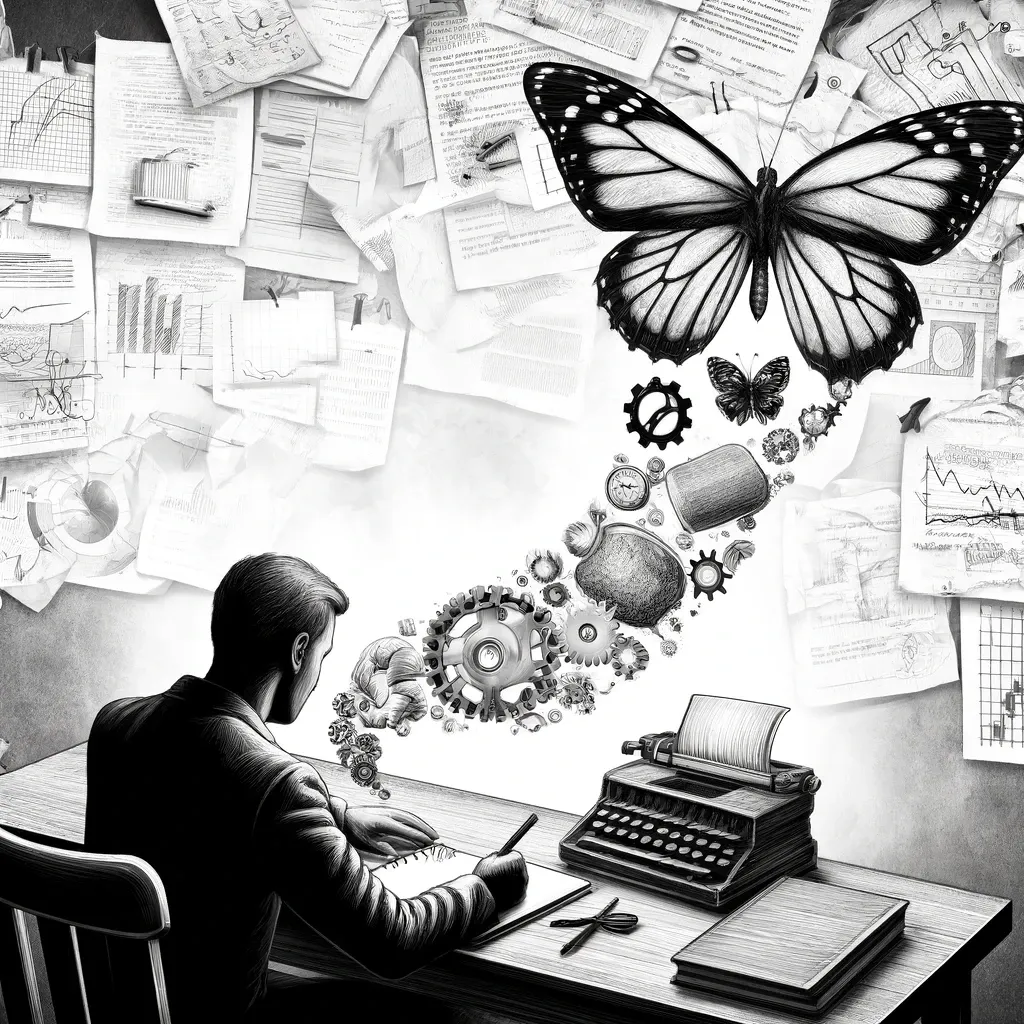
When we read multiple books at once, it's ok to put one down for a while, and switch to another one that we are currently reading. It's not about multitasking; when we read a book, we can still stay 100% focused on that activity. The obvious benefit is that we can avoid getting demotivated by renewing our interest thanks to the context switch.
I've been experimenting with this approach for a while, and have found that my motivation to continue a book that bored me a bit usually comes back after 4-7 days. That happens unconsciously, but is probably related to the fact that I'm a "completionist".
How to do it?
There are no "rules" with this approach. You may pick up as many books as you are comfortable with, switch whenever you feel like switching, and don't feel bad if you end up abandoning some. I'm currently busy reading 5-10 books, and switch between those regularly.
One challenge with this technique is the fact that you may lose context if you leave a book aside for too long. I've found that consistently taking notes while reading non-fiction solves this almost entirely. You just have to rewind a bit, read your most recent notes, and you'll quickly get back to where you left things off.
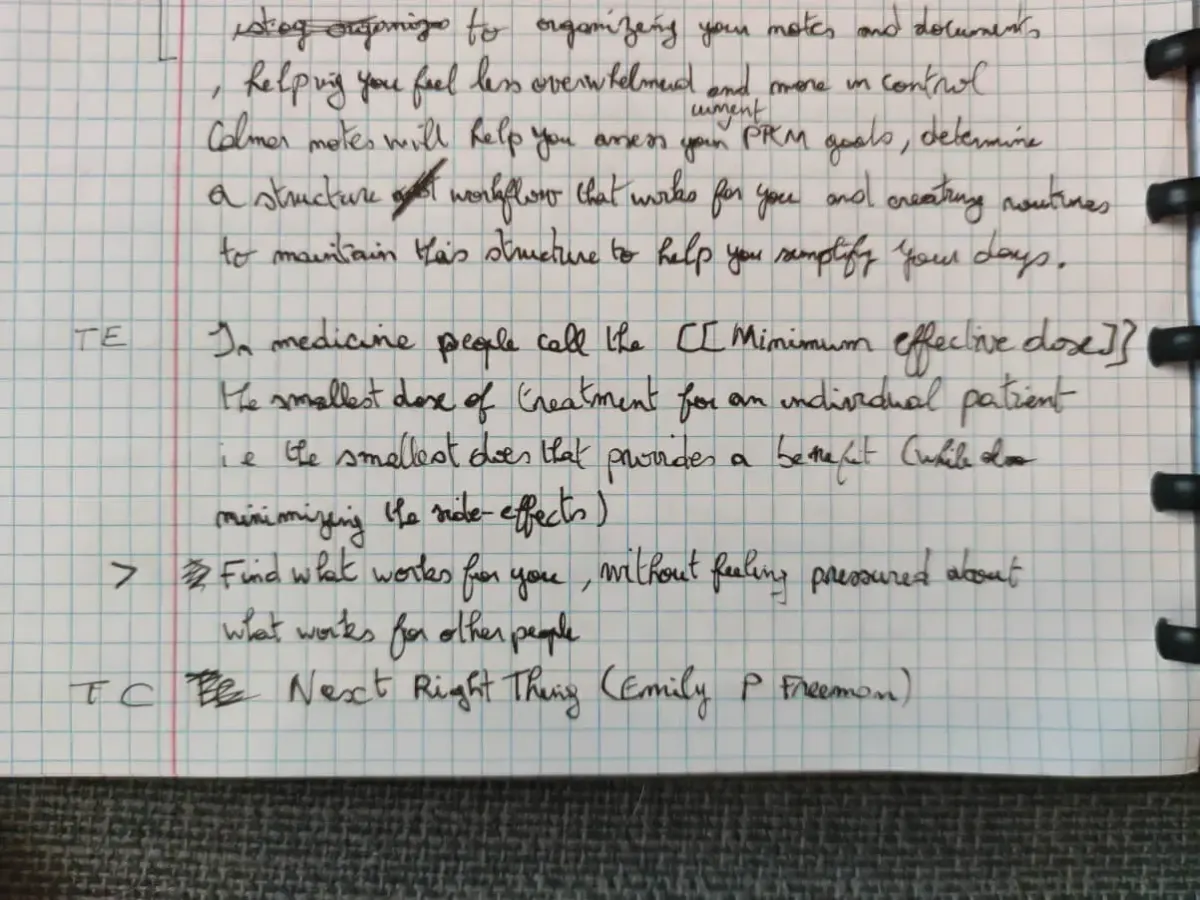
Note-taking alone is helpful, but having a Personal Knowledge Management (PKM) system is much more powerful, as you'll be able to not only capture book notes, but also to extract concepts, ideas, mental models, and connect everything together with the rest of your knowledge base. Check out the references for more details.
I personally put most of my books on my e-reader, and switch between those when I feel like it. I take notes using my ReMarkable, where each book has a dedicated notebook. Once I'm done with a book, I convert those "analog" notes to digital ones (using the method in the references section), and import everything into Obsidian, where I have a specific system for handling book notes. By the way, my whole system is available for purchase:
 Knowledge Forge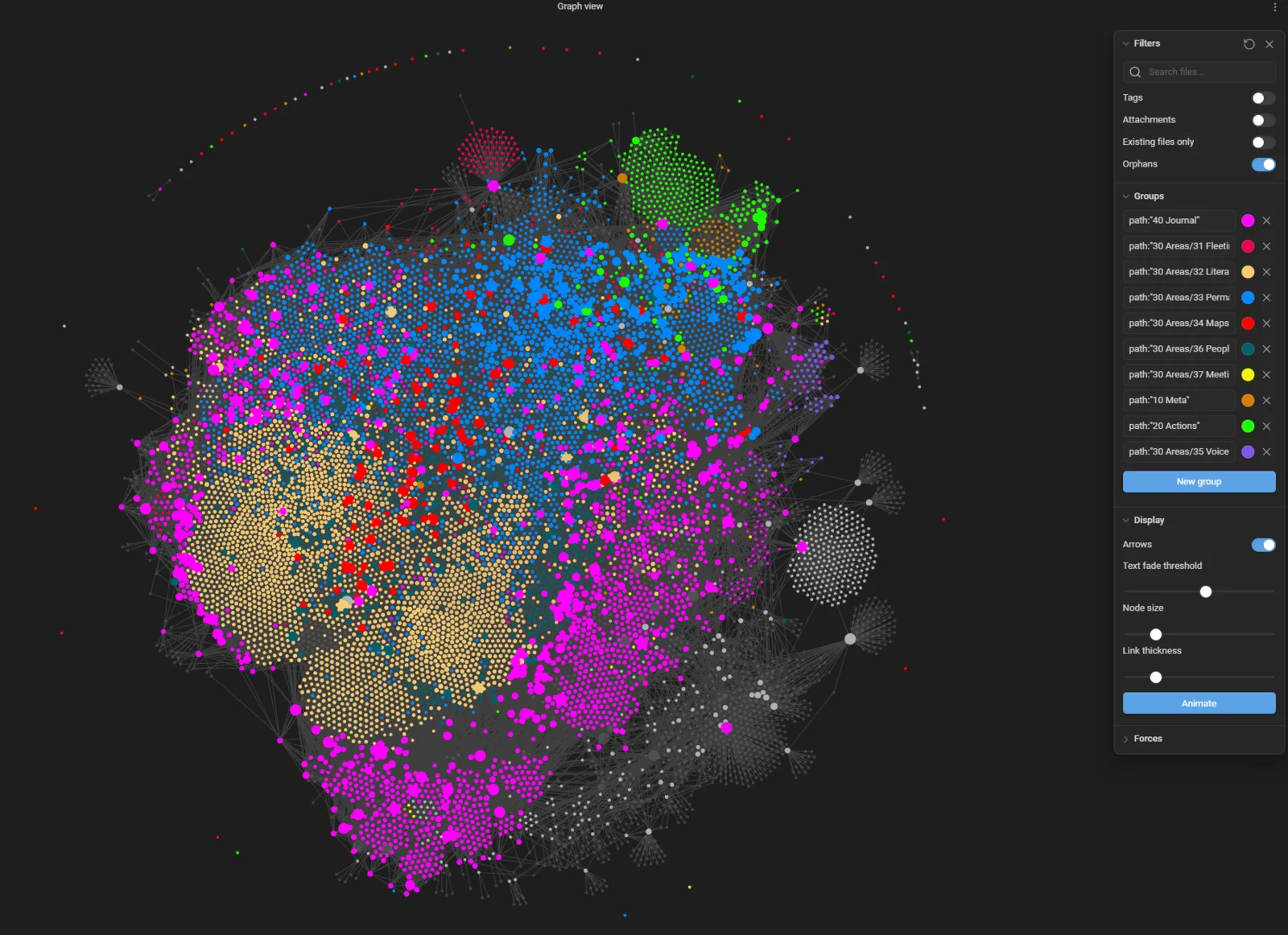
Interleaving books does imply finishing each book later on, but that shouldn't be an issue in most cases. After all, reading must remain a pleasurable activity, not a stressful one.
References
- I thought about this while reading an article about interleaving indie projects for productivity and growth reasons): https://daily.tinyprojects.dev/67
- Knowledge Management
- How to convert notes from analog to digital
- How I manage books and summaries in Obsidian
Go Further
 Sébastien Dubois
 Sébastien Dubois
 Sébastien Dubois
Want to go deeper?
Sébastien Dubois
About Sébastien
I'm Sébastien Dubois, and I'm on a mission to help knowledge workers escape information overload. After 20+ years in IT and seeing too many brilliant minds drowning in digital chaos, I've decided to help people build systems that actually work. Through the Knowii Community, my courses, products & services and my Website/Newsletter, I share practical and battle-tested systems.
I write about Knowledge Work, Personal Knowledge Management, Note-taking, Lifelong Learning, Personal Organization, Productivity, and more. I also craft lovely digital products and tools.
If you want to follow my work, then become a member and join our community.
Ready to get to the next level?
Want a better note-taking system?
- 🚀 Obsidian Starter Kit — Ready-made vault with 40+ templates
- 🎬 Obsidian Starter Course — Master Obsidian in 2+ hours
- 📚 KM for Beginners — From information chaos to organized knowledge
- 🎯 Join Knowii — Community + ALL courses & tools
Found this valuable? Share it with someone who needs it.