
10 Essential Knowledge Management Methods Every Professional Should Master

Stop drowning in information. Transform scattered thoughts into organized knowledge with these 10 proven methods from my Knowledge Management for Beginners course.

In this article, I want to share the most powerful methods for organizing and using your knowledge effectively. These aren't just theoretical concepts. They're practical systems I teach in my Knowledge Management for Beginners course that can transform how you handle information at work and in life.
Introduction
After years of helping professionals organize their knowledge and refining my own system, I've identified the core methods that separate those who stay on top of information from those who drown in it.
These 10 methods aren't just tools — they're core practices that show you what to build (your knowledge system) and how to use it (your process). Master these, and you'll have a complete framework for transforming scattered information into connected insights.
What is Knowledge Management?
Knowledge Management is the practice of systematically capturing, organizing, and using knowledge to improve decision-making, learning, and productivity. It turns scattered information into structured insights you can actually find and apply when you need them.
Without clear methods, most people default to saving everything in random folders or apps. Nothing connects. Nothing compounds. That is why knowledge management methods matter. They give you a repeatable process for turning raw information into lasting understanding.
Knowledge Management Methodologies Overview
The 10 knowledge management methodologies below cover the full lifecycle of working with knowledge, from capturing your first idea to building a connected web of insights. Each methodology addresses a specific challenge professionals face when dealing with information overload.
Here is a quick overview of what each methodology covers:
- The Knowledge Management Process - A complete 10-step system for learning
- One-Idea Notes - Writing focused, reusable notes
- The Knowledge Funnel - Moving ideas from capture to organized insights
- Three Core Types of Notes - Categorizing notes by purpose
- Connected Thinking - Linking ideas to create new understanding
- The Capture System - Never losing a valuable idea
- PARA Method - Organizing by actionability
- Daily Notes - Your daily knowledge command center
- Regular Reviews - Turning captures into real knowledge
- Knowledge Graph Thinking - Seeing the big picture
These methodologies work independently, but they become far more powerful when combined into a unified knowledge management system. Let's dive into each one.
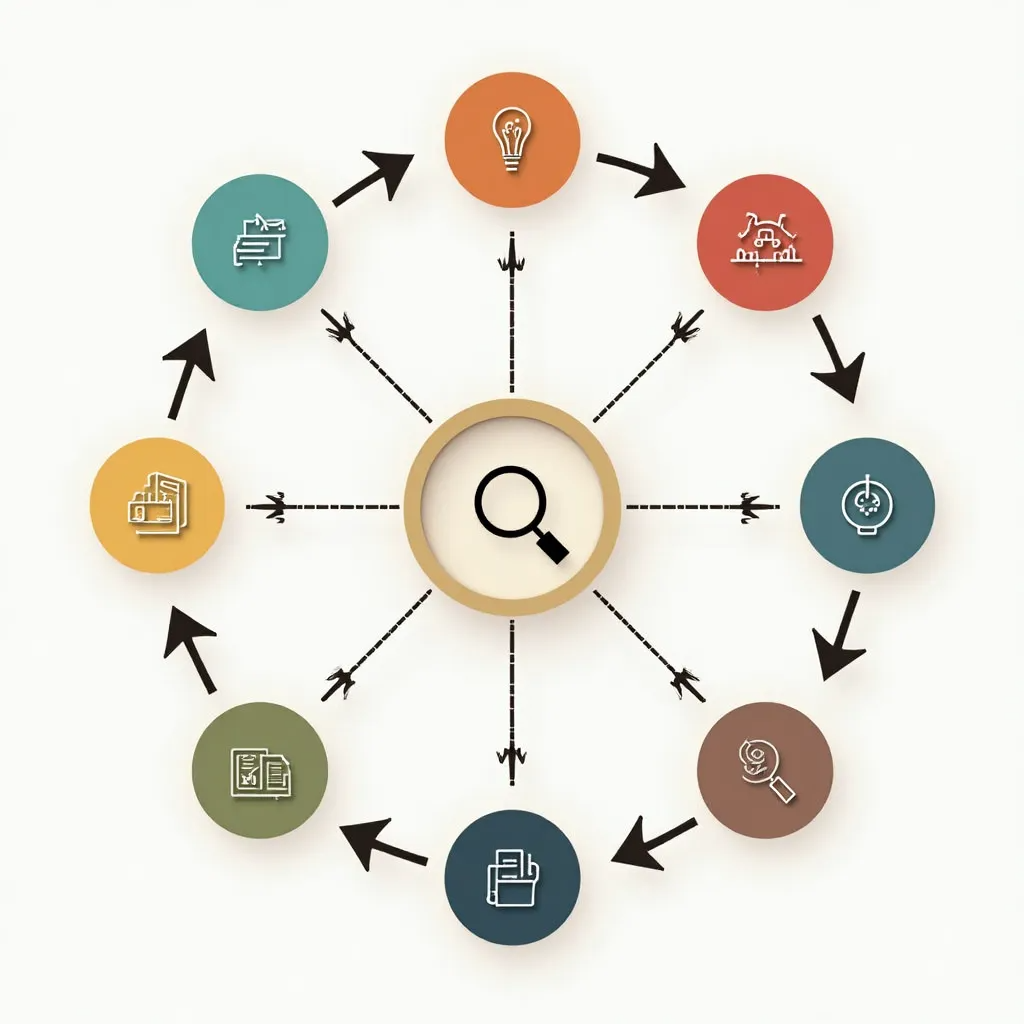
1. The Knowledge Management Process: A 10-Step System for Learning
This is the backbone of all effective knowledge management. A ten-stage process that turns random information into valuable knowledge you can actually use.
How it works:
- Explore: Find interesting sources like articles, books, podcasts, etc
- Curate: Save content worth reading or watching later. Keep track of what you want to consume
- Consume: Carefully pick a piece you've curated, and actively engage with it
- Capture: Capture what resonates, key insights, and your own thoughts
- Distill: Extract and break down captured information into atomic ideas
- Organize: Organize what you've distilled, file, categorize, and add metadata
- Connect: Break down complex ideas into simple notes and link those together
- Develop: Develop your ideas, leverage your knowledge, and expand your understanding
- Create: Combine existing knowledge into new ideas and content
- Share: Share your insights to help others, get feedback, and uncover the gaps in your knowledge & understanding
The beauty of this process? It's a Virtuous circle. Each time through strengthens your knowledge base and improves your thinking.
This process is described in my public notes: Personal Knowledge Management Process.
2. One-Idea Notes: Keep It Simple and Powerful
Instead of writing long documents that mix multiple topics, create focused notes that contain just one concept or idea. Those are called Atomic notes.
Key characteristics:
- Focus on one idea or concept
- Written in your own words
- Clear and easy to understand
- Easy to connect with other notes
- Reusable in different situations
Think of these as building blocks. Instead of having giant LEGO sets you can't take apart, you have individual pieces you can combine in countless ways.
3. The Knowledge Funnel: From Scattered Ideas to Organized Insights
Your knowledge funnel is the systematic pathway that moves information from "oh, that's interesting" to "I have notes about this I can leverage!"
The funnel stages:
- Quick capture while reading or listening (highlights, quick notes)
- Daily journal as your main collection point
- Weekly review to pull out key ideas (cfr Periodic reviews)
- Organization within your knowledge system
- Regular review to strengthen your understanding
This method ensures nothing valuable gets lost between having an interesting thought and actually being able to use it later.
4. Three Core Types of Notes: Quick, Inspiration, Content
Inspired by the Zettelkasten method, a simple approach that people take way too seriously, this system organizes your knowledge by how you use it.
Note types:
- Quick notes: Temporary captures that need to be processed later (may be copied from others or be your own notes using your own words)
- Inspiration notes: Capture what others have said (quotes, summaries, explanations, etc)
- Content Notes: Your own thoughts and understanding in your own words
The key is regularly converting "Quick notes" into "Inspiration notes" and "Content notes", ensuring your knowledge base grows through active thinking, not just passive collecting.
The approach I recommend for quick notes is to capture those as part of your journal entries (i.e., daily notes). More about this later in this article.
These different types of notes are at the core. But you can have additional ones such as journal entries, meeting notes, personal notes, etc...
5. Connected Thinking: Link Ideas Together
Knowledge becomes really powerful when it's connected. This method focuses on building meaningful relationships between different ideas.
Connection techniques:
- Direct links: Connect one note to related concepts
- Automatic connections: Your software shows you unexpected relationships
- Tags and metadata: Add categories to make ideas easier to find
- Maps: Create index notes that organize related concepts (cfr Maps of Content (MoCs))
Ask yourself: "What does this remind me of?" and "How is this different from what I already know?" to discover natural connections.
Take some time Maps of Content (MoCs); maps of your ideas about different topics. Here are some of mine:
Those become more and more valuable over time.
6. The Capture System: Never Lose a Good Idea Again
A reliable capture system ensures you never lose valuable insights, no matter when or where they occur.
System components:
- Digital tools: Note-taking apps, save-for-later services, voice recording apps
- Mobile access: Apps that work on all your devices
- Easy transfer: Ways to move what you capture into your main system
- Last resort: Paper, notebooks for when you can't use your phone
The goal isn't to capture everything. Rather, the goal is to capture what matters when inspiration strikes.
But at the end of the day, you want a Single Source of Truth (SSOT), a single place where you regroup everything. All your knowledge and ideas need to converge to that place.
7. PARA Method: Organize by What You'll Do With It
The PARA method of Tiago Forte provides a simple way to organize any type of information based on how actionable it is.
Four "spaces":
- Projects: Things with deadlines and specific outcomes
- Areas: Ongoing responsibilities without deadlines (you can store MOST of your notes there)
- Resources: Reference materials (e.g., images, PDF documents, etc)
- Archives: Old items you want to keep around just in case
PARA works because it organizes information by what you'll do with it, not what topic it covers — making it much easier to find what you need when you need it.
Whatever you do, keep this in mind: organizing information by topic does not work and does not scale. Organize your information by type, it works much better, simplifies everything, and scales really well.
You may also combine the PARA method with the Johnny Decimal system created by Johnny Noble.
Ideally, you want to reuse the same base structure everywhere (notes, emails, documents, etc).
8. Daily Notes: Your Knowledge Command Center
Your daily note serves as the main entry point for new information and the planning center for your day.
Daily note sections:
- Today's plan: Key priorities and focus areas
- Discovered Today: What you learned today/captured
- Notes: Space for ideas, observations. Digital scratchpad
- What I accomplished: Progress tracking and wins
- Challenges: Problems I'm working through
- Gratitude: What you feel grateful for
- Interesting finds: Content to explore later
This method connects your learning with specific days, making it easier to track your growth and remember the context of ideas. With this simple approach, you have ONE place to capture everything new, focus on what matters, track achievements, challenges, and you can also capture what brought you joy.
Moreover, this links knowledge with time, which is really valuable to be able to look back more objectively.
See Journaling (MoC) for more about this.
9. Regular Reviews: Turn Information Into Knowledge
Regular reviews transform scattered daily captures into organized, connected knowledge that you can actually use.
Review schedule:
- Weekly: Process daily notes, pull out key ideas, make connections, adjust your plans
- Monthly: Check progress on bigger projects and goals
- Quarterly: Review how well your system is working and make improvements
- Yearly: Reflect on major insights and plan ahead
These reviews prevent your knowledge system from becoming a digital junk drawer and ensure continuous improvement. Also, those are ideal opportunities to set your goals and priorities at different time scales, from short-term (i.e., tactical) to long-term (i.e., strategic).
See Periodic reviews to learn more.
10. Knowledge Graph Thinking: See the Big Picture
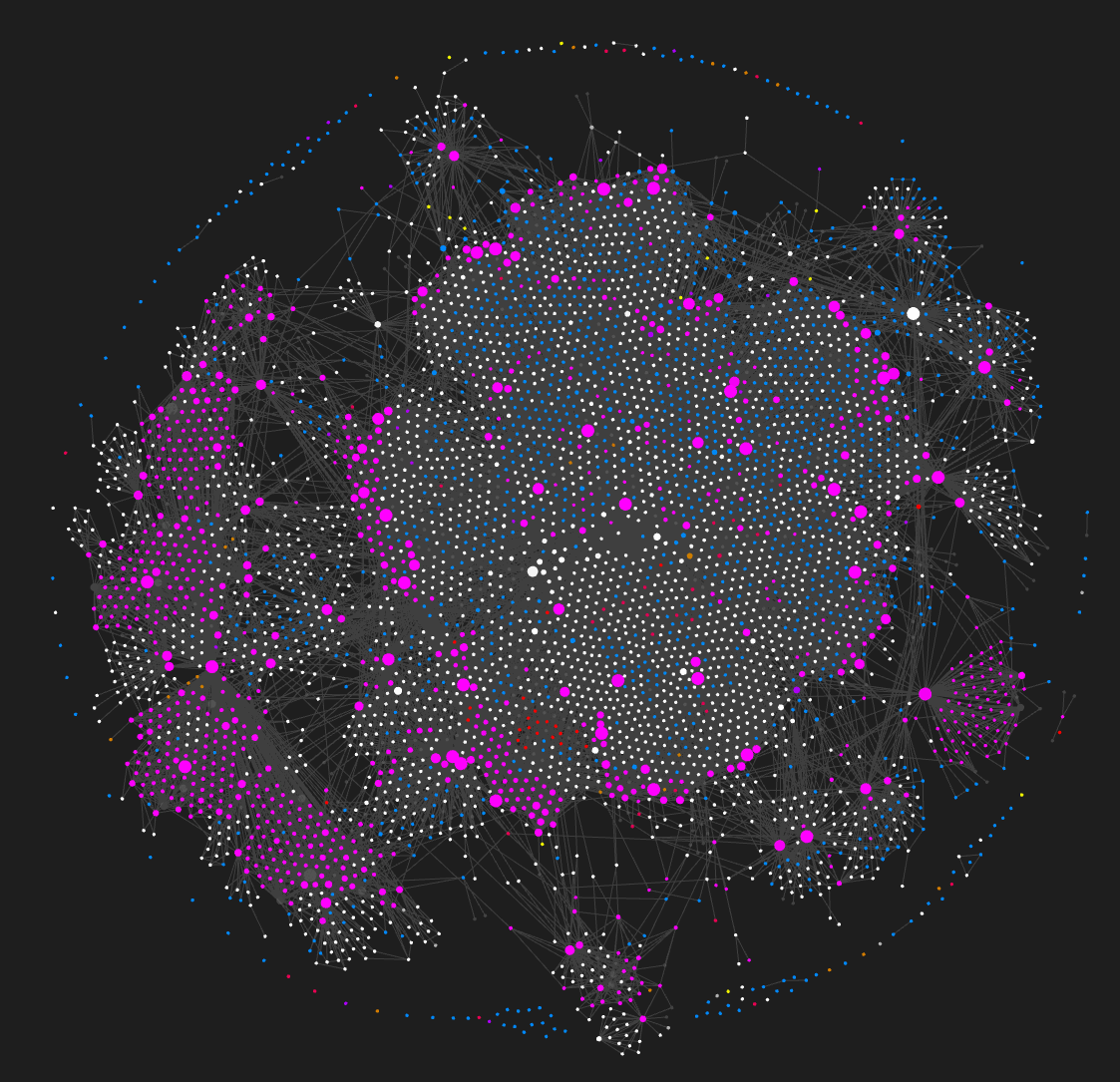
Thinking about your knowledge as a web of connected ideas helps you see patterns and connections that traditional information organization misses.
Practices:
- Visualize connections: Use visual tools to explore relationships between ideas. Create mind maps, and other types of visual ways of thinking
- Follow idea chains: Trace how concepts related to each other. Go from first principles, and connect the dots
- Find clusters: Identify groups of related concepts
- Spot gaps: Discover areas where connections (and often understanding) are weak
- Bridge isolated ideas: Connect lonely concepts to your broader knowledge network
This method transforms your knowledge system from a filing cabinet into a thinking partner. This is where it all becomes interesting.
How to Choose the Right Knowledge Management Method
Not sure where to start? Here is a simple guide based on your experience level.
If you are a complete beginner:
- Start with the Knowledge Management Process (Method 1). It gives you the full picture.
- Add Daily Notes (Method 8) as your capture point.
- Practice writing One-Idea Notes (Method 2) to build your first notes.
If you already take notes but feel disorganized:
- Implement the PARA Method (Method 7) to restructure what you have.
- Add Regular Reviews (Method 9) to process your backlog.
- Start using the Knowledge Funnel (Method 3) to create a clear pipeline.
If you want to level up an existing system:
- Focus on Connected Thinking (Method 5) to link your notes together.
- Explore Knowledge Graph Thinking (Method 10) to spot patterns and gaps.
- Refine your note types (Method 4) for better organization.
The most important thing is to start with one method, practice it until it feels natural, then add the next. Trying to implement everything at once is a recipe for burnout.
Knowledge Management vs Information Management
People often confuse knowledge management with information management. They are related but different.
Information management focuses on storing, organizing, and retrieving data and documents. Think databases, file systems, and document management tools. It answers the question: "Where did I put that file?"
Knowledge management goes further. It focuses on understanding, connecting, and applying information to create new insights. It answers the question: "What do I know about this topic and how does it connect to everything else?" Knowledge management includes the human element: your interpretation, your experience, and your ability to synthesize ideas across domains.
In practice, information management is a subset of knowledge management. You need good information management as a foundation, but knowledge management is what turns stored files into usable wisdom.
Frequently Asked Questions About Knowledge Management Methods
What is the best knowledge management method for beginners?
Start with the Knowledge Management Process (Method 1) combined with Daily Notes (Method 8). The process gives you a clear framework for handling information, and daily notes give you a single place to capture everything. These two methods together cover 80% of what most people need to get started.
How many knowledge management methods should I use?
Start with two or three, then add more as needed. Trying to implement all 10 at once will overwhelm you. Begin with capture and organization, then layer in connection and review methods once the basics feel natural.
What tools do I need for knowledge management?
You need far fewer tools than you think. A single note-taking app that supports linking (like Obsidian) is enough to get started. The methods matter more than the tools. A simple system you actually use beats a complex setup you abandon after a week.
How long does it take to set up a knowledge management system?
You can have a basic system running in an afternoon. Set up your note-taking app, create a daily note template, and start capturing. The system grows organically from there. Most people spend too long planning and not enough time actually using their system.
What is the difference between PKM and KM?
Knowledge Management (KM) is the broad discipline of managing knowledge in any context, including organizations and teams. Personal Knowledge Management (PKM) is KM applied to your individual life and work. The methods in this article apply to both, but they are especially powerful for PKM because you control the entire system.
Can I use these methods without a digital tool?
Yes. Paper notebooks, index cards, and physical folders can support most of these methods. Digital tools make linking and searching easier, but the principles work regardless of medium. The Zettelkasten method, for instance, was originally a physical card system.
Do I need to review my notes every day?
No. Daily capture is important, but deep review works best on a weekly schedule. Set aside 30 to 60 minutes each week to process your daily notes, make connections, and organize your insights. Monthly and quarterly reviews handle the bigger picture.
Putting It All Together
These 10 methods aren't meant to be implemented all at once. Start with the knowledge management process and one-idea notes (i.e., Atomic notes), then gradually add other methods based on your needs and experience. Check where you stand against the Knowledge Management Proficiency Ladder from time to time.
The key is understanding that these methods work together as a complete system. They embody the core principles of effective knowledge management:
- Get it out of your head: Move thoughts from memory to a trusted system
- Connect everything: Link ideas to create new insights
- Follow a process: Use systematic approaches rather than random methods
- Review regularly: Keep strengthening your knowledge over time
- Use what you learn: Apply your knowledge to create real value
An important point I made in my course is the fact that you do not need a note-taking app. What you actually need is a knowledge system and a systematic approach. This system can be used and leveraged for all your projects, to dive deeper into any topic, to better use AI, etc.
Going Further
These methods form the foundation of my Knowledge Management for Beginners course, where I provide step-by-step guidance on implementing each one.
If you're ready to stop feeling overwhelmed by information and start building a system that actually works, the course provides everything you need, and then some more.
For those seeking a complete knowledge system, Knowii offers a comprehensive community with access to all my courses and products, structured learning paths, and ongoing support from peers and experts who face similar challenges.
 Knowledge Forge
The choice is yours: continue struggling with information overload, or master these proven methods to build a knowledge system that multiplies your effectiveness.
Conclusion
Knowledge management isn't about collecting more information. It's not about hopping from tool to tool all the time, following the trends (i.e., Shiny object syndrome). No.
Rather, it's about building better systems for thinking. It's about creating a Fourth place, a place for deep thinking. It's something that I discussed earlier here.
 Sebastien Dubois
These 10 methods provide the framework for transforming scattered thoughts into connected insights, random facts into organized knowledge, and information overload into personal power.
Start with one method, master it, then add the next. Your future self will thank you for taking the first step today.
That's it for today! ✨
Go Further
 Sébastien Dubois
 Sébastien Dubois
 Sébastien Dubois
Want to go deeper?
Sébastien Dubois
About Sébastien
Ready to get to the next level?
Found this valuable? Share it with someone who needs it.