
DeveloPassion's Newsletter #211 - Shipping AI Skills in the Open

Edition 211 of my newsletter, discussing Knowledge Work, AI, Knowledge Management, Zen Productivity, Personal Organization, and more!
Hello everyone! I'm Sébastien Dubois, your host. You're receiving this email because you signed up for DeveloPassion's Newsletter, or bought one of my products. Thank you for being here with me ✨
If you enjoy this, please forward it to your friends ❤️. If this email was forwarded to you, then don't forget to subscribe and become a supporter
Welcome
Welcome to all the new readers ❤️
A lot has happened over the past three weeks; so much that I almost didn't know where to start writing this one. So I picked the thread that ties it all together: AI Skills are becoming the new unit of knowledge work, and I've been shipping them like crazy ^__^.
On the personal side, I'm slowly getting back in shape. I've been running consistently, exercising daily, and losing weight. Small wins compound. I also had a small surgery this week (dental implant); not fun, but manageable. As I'll discuss further, Obsidian and AI help me a ton to analyze my health/exercise data and to prepare plans, and it's mega useful. Similarly, I'm now leveraging LLM Wikis to explore different topics such as nutrition, exercise/running, physics, etc. It's a great way to explore and learn new things.
I've also been reading more. I decided to finally learn more about physics, a topic that I've been curious about for a long time. I started The Feynman Lectures on Physics (book), an awesome "introduction" by one of the best teachers ever; Professor Richard Feynman. I'm listening to the audio book version during my commutes), taking notes about what I discover using Voicenotes AI, and asking tons of questions to AI about the first principles.
I also started dipping into The Mountain Is You (book) by Brianna Wiest. I love how she explores self-sabotaging behaviors and their true origins. I'm taking tons of notes, and will be publishing those soon.
On the fiction side, I recently finished Digital Fortress (Book) by Dan Brown, which I found to be really disappointing. Having studied cryptography at university, the technical side of the book wasn't correct/grounded in reality, so it really put me off! By the way, Mr Michael Rabin, who was a real legend/pioneer of cryptography died recently... :(
I've now started reading J'ai encore menti ! (book) by Gilles Legardinier, a very fun to read French author.
Alright, let's gooooo 🚀
Highlights
- 🤖 Shipped 3 open-source AI Skills on GitHub: Garmin, arXiv, Google Scholar
- 🔌 Released the Hidden Folders Access plugin for Obsidian; finally expose
.claude/and friends inside your vault - 🔌 Released the Graph Explorer Base View plugin for Obsidian; interactive force-directed graphs on top of Obsidian Bases
- 🧠 Obsidian Starter Kit v4 is getting close; I wrote about the journey so far
- 📰 Launched the News Flash page on my blog (short-form notes; a bit like Simon Willison's TIL)
- 🔥 New article on the local AI wave (Kimi K2.6, Qwen, Gemma 4)
- 💰 Updated Knowii pricing: quarterly minimum, no more monthly, no more trial
- 🧩 3,800+ concepts on concepts.dsebastien.net
- 📖 Still planning The Context Layer book; the outline keeps growing
Before You Go Any Further
I want to reach more people. Got 20 seconds? Share the link with one friend/colleague who would benefit from joining us. And don't forget to also mention the Knowii Community ❤️
And if you bought some of my products or courses? Please leave a rating/review. It really helps ❤️
The Lab 🧪
🤖 AI Skills Are the New Primitive; and I'm Shipping (Some of) Them in the Open
Over the past three weeks, I've published three open-source AI Skills on GitHub under the MIT license. You install them with a single command:
npx skills add dsebastien/ai-skill-...That's it. Restart Claude Code (or whatever AI tool you use that supports skills) and you now have a new capability available.
AI Agent Skills extend AI agents. When I install the Garmin skill, my AI assistant suddenly knows how to pull my Garmin Connect data into my daily notes in Obsidian. When I install the arXiv skill, it can search, analyze, and monitor research papers. The skill carries the "how"; the agent takes care of the why and the reasoning.
This is an actionable knowledge distribution model I find really exciting. A skill is just a folder with a SKILL.md file, some scripts, and a clear trigger. You can version it, audit it, fork it, remix it. It runs on your machine, with your context, on your data. No SaaS dependency. No vendor lock-in.
I strongly recommend reading the open specification for AI skills. It's very short and easy to read:

The three I shipped so far:
- Garmin AI Skill: syncs my Garmin Venu 3 data (sleep, HRV, training load, body battery, ...) into my daily notes in Obsidian. I use it for my half-marathon prep; I can also feed it to an AI coach for recommendations
ai-skill-arxiv: search arXiv, analyze papers, monitor topics with saved queriesai-skill-scholar: search Google Scholar, pull citations, generate literature reviews
I wrote about the last two here:
Sebastien Dubois
I also wrote an article on why AI skills break on other machines; hidden assumptions about paths, tools, auth, and environment. If you're building skills that other people will actually run, this is worth a read.
Sebastien Dubois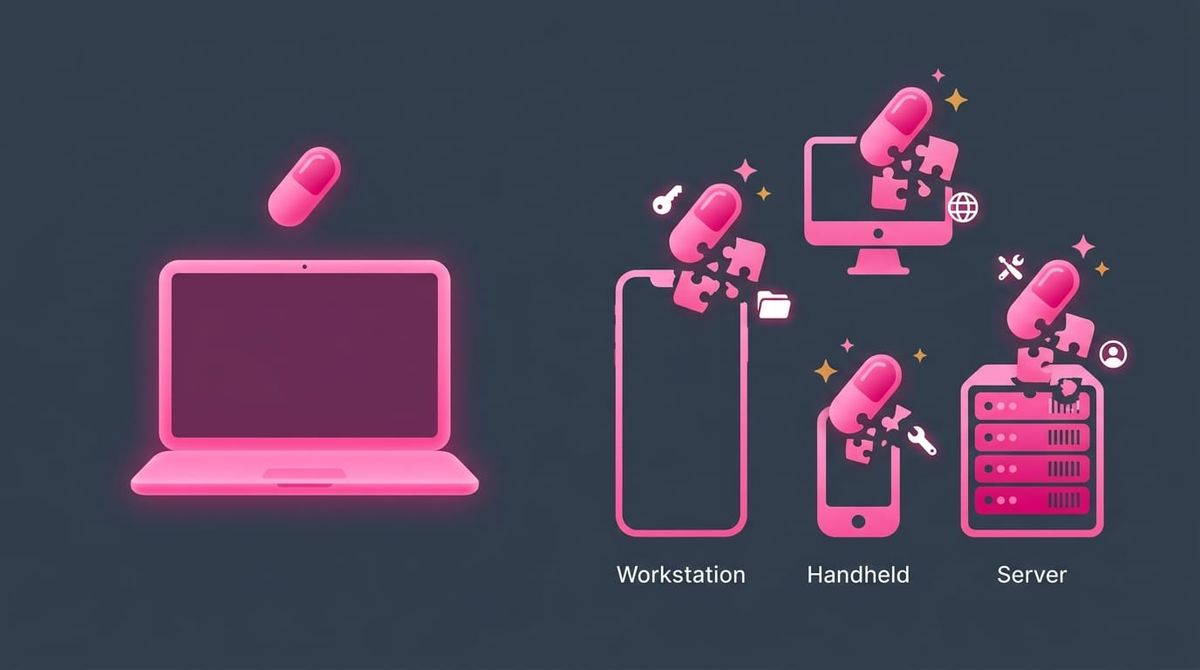
And the Garmin one:
Sebastien DuboisSource code:
- github.com/dsebastien/ai-skill-garmin
- github.com/dsebastien/ai-skill-arxiv
- github.com/dsebastien/ai-skill-scholar
The AI Skill as a distribution unit is going to be a big deal. Install once, reuse forever, share with others. It's also a fantastic way to package your own workflows and make them portable across machines and agents.
From now on, I'll list the (open source) AI skills I've created here: My Published AI Skills.
🔌 Two New Obsidian Plugins
I've been dogfooding heavily, and dogfooding surfaces gaps. Here are two gaps I closed this month.
Hidden Folders Access plugin for Obsidian: Obsidian hides dot-folders by default (.claude/, .git/, .github/, ...). That's usually fine, but if you want your AI Skills, agent definitions, and workflows indexed by Obsidian (searchable, query-able, show up in Obsidian Bases), you not only NEED to see them, but you also need Obsidian to index them. This plugin takes care of both.
Thanks to this plugin, I was able to build a new AI-focused Obsidian Base on top of my AI Agents & Skills, which is pretty cool.
Sebastien DuboisGraph Explorer Base View plugin for Obsidian: a custom Base view type that renders notes as an interactive force-directed graph. Filter the base, and the graph updates live. Move nodes, move groups, see the legend, explore clusters. Obsidian's default graph view is great for the whole vault, but I needed the same thing scoped to a specific Base (say, all my LLM Wiki articles). So I built it. I also wrote about why LLM Wikis need a visual layer; the tl;dr is that knowledge bases are naturally graph-shaped, and reading them linearly misses half the value.
Sebastien Dubois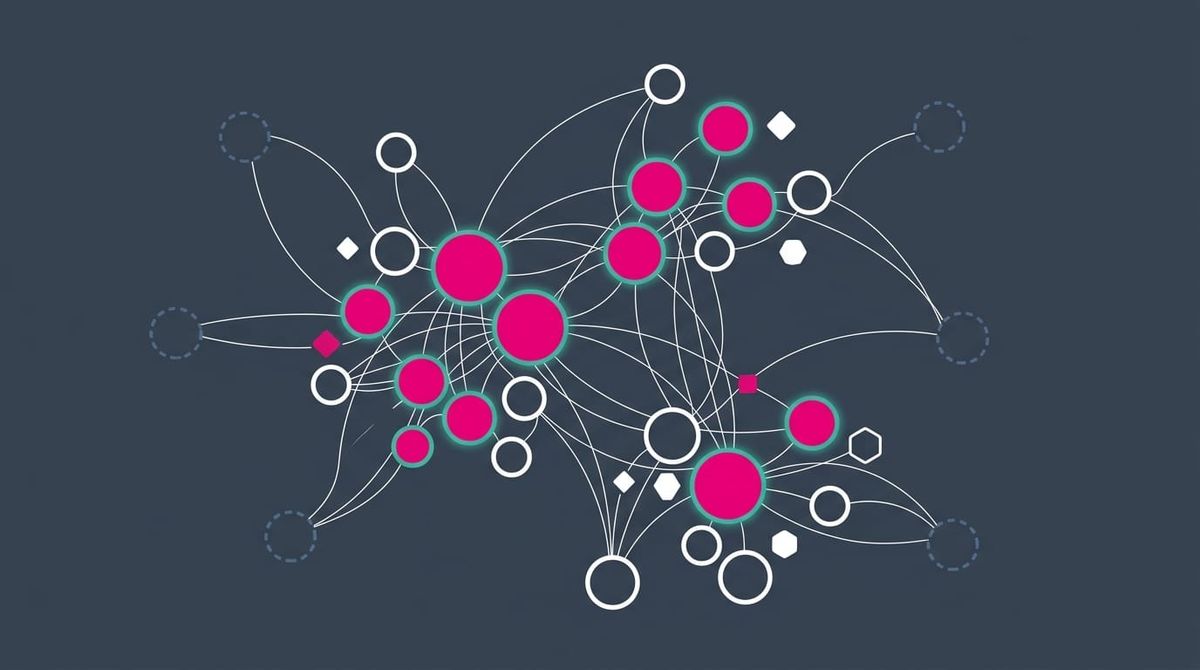
Both plugins are open-source and can be installed either manually (download a release from the Releases page on GitHub) or using the BRAT plugin for Obsidian. They're not official community plugins, because I've realized that it's just taking way too long for the Obsidian team to approve new plugins. They're getting SWAMPED by the community, which is understandable given that AI really lowered the bar to create new things.
I keep coming back to this, but Obsidian is really an operating system for Markdown:
The reality is that @obsdmd is an operating system/platform for Markdown.
— Sébastien Dubois (@dSebastien) April 14, 2026
People don't truly understand the fact that you can build almost ANYTHING YOU WANT on top of it.@andy_matuschak gets it, and demonstrated it clearly too!
🧠 Obsidian Starter Kit v4 Is Almost Here
I shipped a retrospective article this week: 4 years, 20K notes, and AI Agents; the OSK v4 story. If you want to understand what v4 is going to be (fully AI-enabled vault, hundreds of AI skills, dedicated agent system with persistent memory, LLM Wikis, MCP server, CLI, typed notes), this is the piece to read.
Sebastien Dubois
I'll publish more to cover the different improvements, but first I have to SHIP! :)
Reminder: the price will go up after v4 ships. If you've been on the fence, now is the time. Lifetime access, one-time purchase, 4 years of continuous iteration.
Dwayne Appleby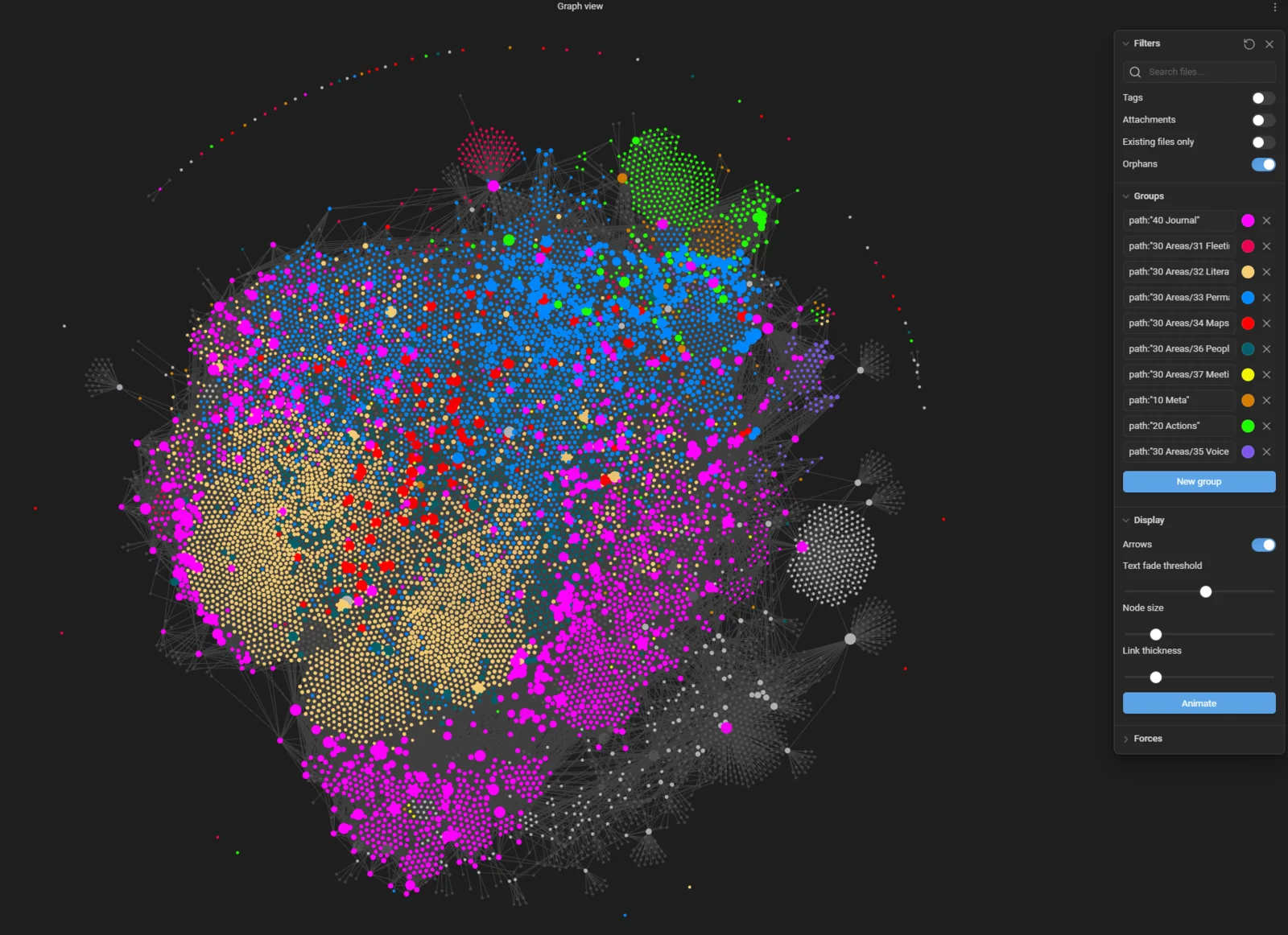
📰 Introducing DeveloPassion's News Flash
I started publishing short-form news posts on my blog; little updates, product announcements, cool discoveries, quick thoughts. A bit like Simon Willison's "TIL" posts, but DeveloPassion flavored.
The goal is to get out of the "either a full article, a newsletter or nothing" status quo. Sometimes I want to share a thing without writing 2,000 words about it. The News page is where those live.
This new section also makes it much easier for me to share interesting links.
Last but not least, some of those news posts will also be sent by e-mail. I'll try not to spam you with all the ideas that cross my mind ;-)
🔥 Local AI Is Catching Up
The April 2026 wave is wild.
- Kimi K2.6 from Moonshot AI: 66.7% on Terminal-Bench 2.0, 4,000+ tool calls in 12-hour runs, 300-agent swarms. Open-weight
- Qwen3.6-35B-A3B: open-weight MoE (35B total, ~3B active). A 21GB quantized version running locally beat Claude Opus 4.7 on Simon Willison's pelican-SVG test
- Gemma 4: Google's new open-weight family
Not so long ago, "local AI" mostly meant toy models. But things have changed. Now, there are really powerful AI models that can run on desktops, laptops, and even smartphones. The gap between frontier models and open-weight models releases keeps compressing. It's great news for privacy, cost, sovereignty, and experimentation.
The "AI tigers" of China (Moonshot AI, Zhipu AI (Z.ai), Baichuan, Deepseek) keep pushing the frontier forward, and open-weight wins benefit everyone.
Sebastien Dubois💰 Knowii Pricing Update
I've updated Knowii Community pricing. The main changes:
- No more monthly billing: quarterly minimum across all tiers. This filters for committed members who will actually show up, apply what they learn, and make a real difference in their lives
- No more trial: Explorer tier at €14.99/quarter is now the low-commitment entry point
Why? Because the people who join Knowii to "just try" or simply to grab free bonuses rarely engage, and community quality depends on people who are committed to the journey. Lower prices also attract the wrong audience. The new model is simpler, and it signals the seriousness of the community.
If you're already subscribed, don't worry, nothing changes for you.
Sofia
🏃 Your Health, as a First-Class Citizen in Your Vault
One of the bigger directions for the OSK v4 release is a deeper health & exercise system baked right into the vault. Your Obsidian vault is already the place where you think, plan, and write; there's no reason your health data shouldn't live next to it.
Over the past weeks, I've:
Extended the daily note template with an extended set of health & exercise fields. Sleep duration, sleep quality, stress, HRV, training readiness, body battery, VO2 max, resting heart rate, nutrition (water, caffeine, meals, supplements, fasting hours), exercise (runs, gym, walks, cycling, swimming, steps, distance, active minutes), reps (push-ups, squats, lunges, plank seconds), medications, symptoms, and more. Each field is a typed property, which means it's queryable, charteable, and usable by AI.
Improved the Health Base on top of those fields. I can see trends, filter by date/activity/metric, and spot patterns at a glance. Paired with the Life Tracker plugin for Obsidian, I also get beautiful visualizations directly inside Obsidian. No separate dashboard, no Notion page, no third-party app. Just the vault.
Shipped a set of AI Skills focused on health & experimentation:
osk-health-profile: synthesizes all my daily note health data into a structured profileosk-health-insights: analyzes health data over time for patterns and anomaliesosk-health-recommendations: suggests adjustments based on recent trendsosk-health-checkin: guided daily health data entryosk-health-experiment: define health experiments with intervention, duration, measures, and readoutosk-experiment-design/osk-experiment-readout: for rigorous experiment plans and after-action analysis on ANY domain, not just healthosk-health-research: maintains a personal health research LLM Wiki. Great to explore new solutions to your health problems. I'm exploring things around Asthma and Amblyopia, which I suffer from, and it's really interesting
Added two new AI Agents:
- OSK Agent Health Coach: prescriptive behavior coach. Doesn't just read your data; designs interventions, runs experiments, holds you accountable. Where the Health Advisor asks "what happened?", the Coach asks "what are you going to do about it?"
- OSK Agent Sports Coach: sport-agnostic training designer. Builds weekly programs, periodizes load, manages recovery, pushes back on ego-driven plans. Running, strength, hybrid, whatever
Created two dedicated private LLM Wikis: one for personal health research (sleep optimization, stress management, anti-inflammatory nutrition, smoking cessation, amblyopia treatment, ...) and one for exercise and nutrition (marathon training for returning runners, strength training for runners, race-day fueling, periostitis prevention, hydration/electrolytes, ...). Each wiki is a structured, source-tracked, connected knowledge base that AI maintains and I consult. I'm keeping these private, but the same pattern applies to anything you want to learn deeply. Just start AI in an OSK v4 vault and ask it to create an LLM Wiki about the topic you're curious about.
Let me zoom in on one of the skills I use the most: osk-health-profile. It reads all my daily notes, pulls every health/exercise field, augments it with the data that my Garmin AI skill imported, and generates a structured profile of my health state over time. Sleep patterns, training load trends, nutrition gaps, stress dynamics, relationships between sleep and performance, recovery vs workload, ... all in one pass. It's not a dashboard; it's a synthesis. And because it runs against my own data, it's grounded and really valuable for me. When I ran it a few days ago, a few things jumped out:
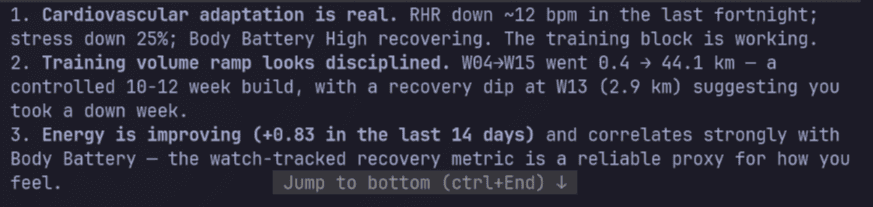
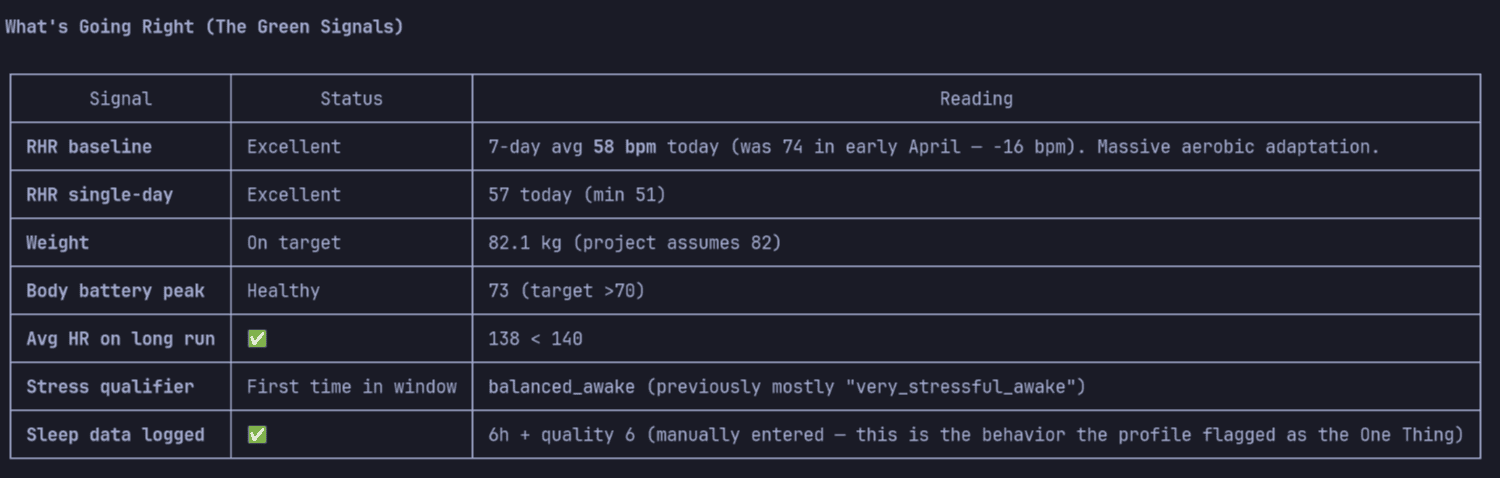
Two things I noticed running this: I need to track nutrition and sleep more consistently (many empty fields), and my body is actually recovering well from the recent running sessions. Both insights directly give me more confidence about my half-marathon prep.
The result? When I want to check my progress for the half-marathon preparation, I don't open 6 apps. I open Obsidian. The Garmin skill syncs my latest data. The Health Profile skill synthesizes it. The Sports Coach looks at my training load, readiness, and recent runs. The Health Coach nudges me on sleep and hydration. The wikis back everything with evidence. Here's what a recent prep session looked like:
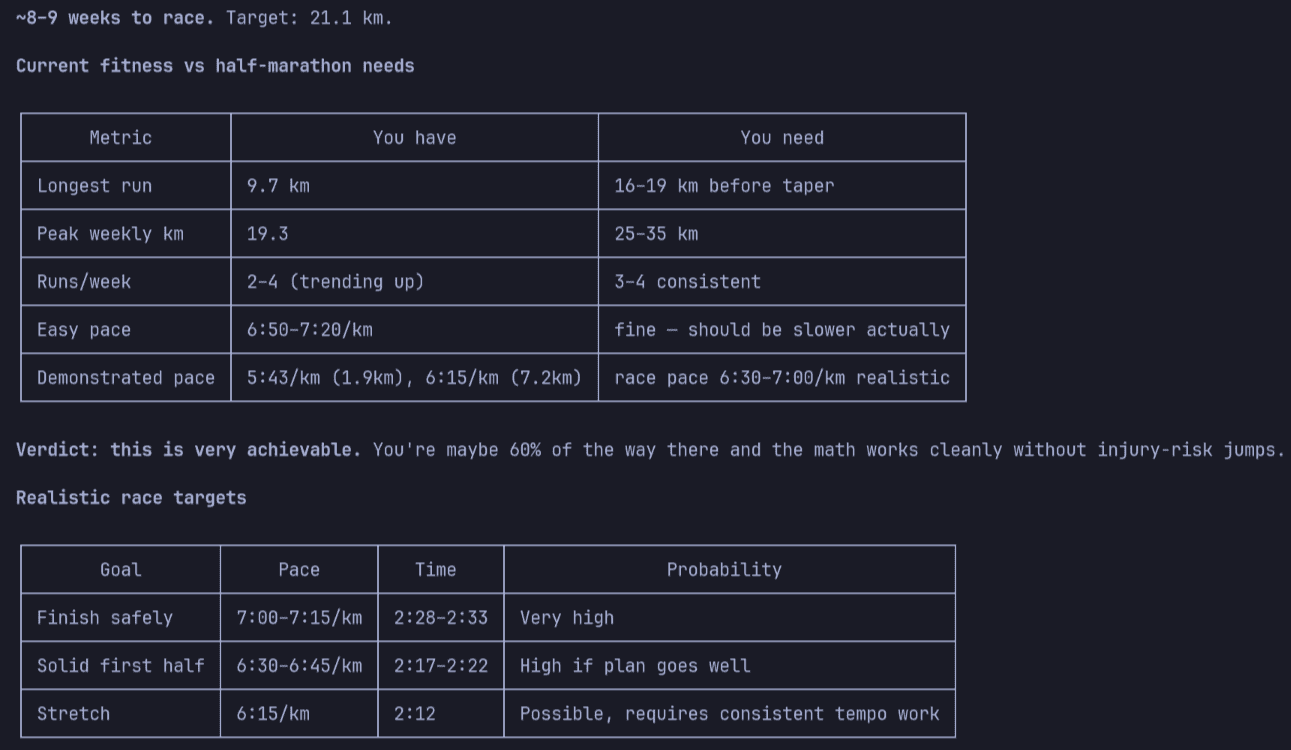
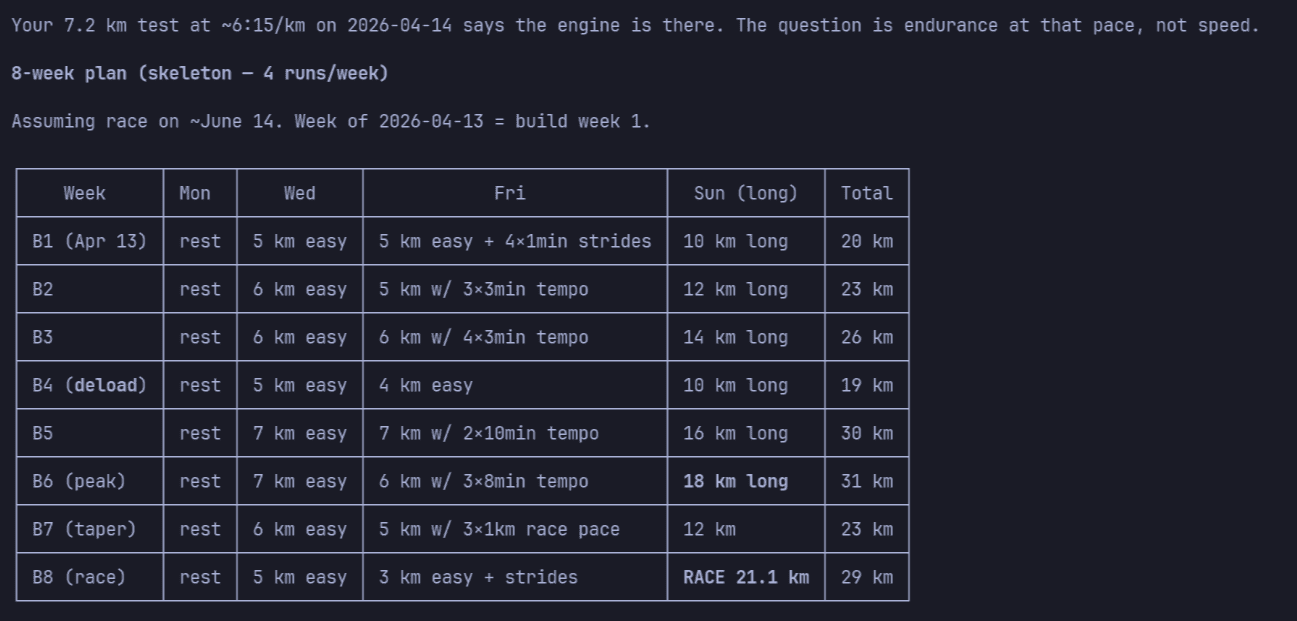
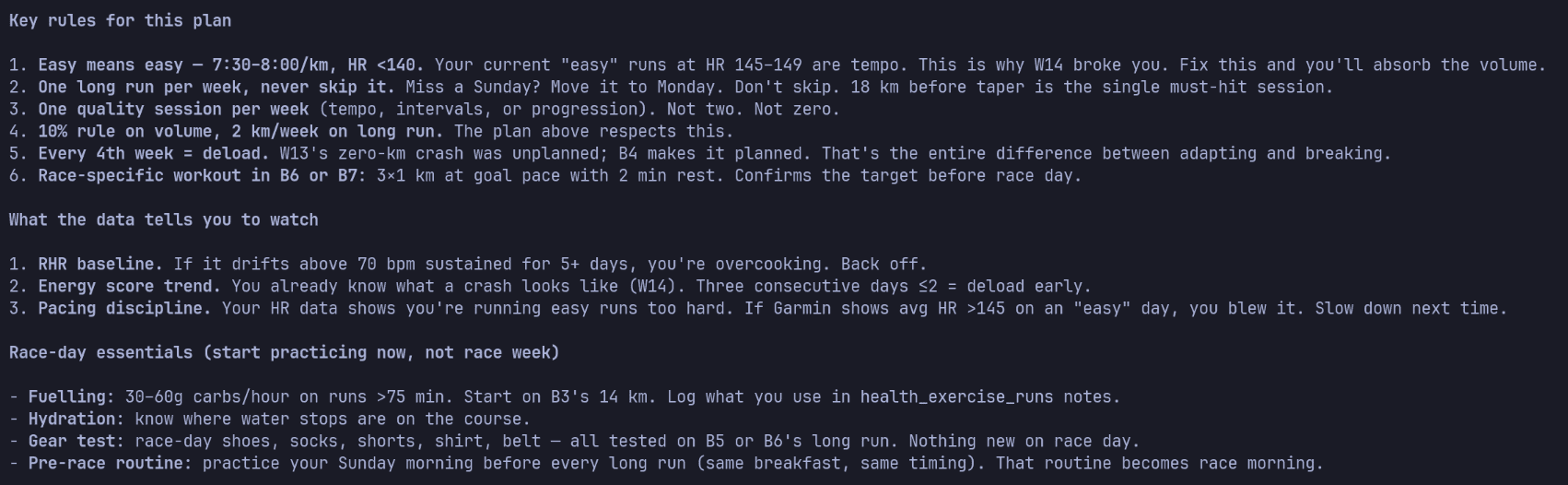
This is what "AI + Knowledge Management" means in practice. Not a chatbot. A fully integrated system where your data, your tools, your agents, and your knowledge all live together and compound. This is going to be part of OSK v4 too!
🛡️ Slopsquatting and the New Supply Chain Attacks
A few weeks back, I published an article on slopsquatting; a new class of supply chain attack where attackers register package names that LLMs hallucinate. Vibe coding makes it worse. If you use AI for coding (you probably do), this is worth a read.
Sebastien Dubois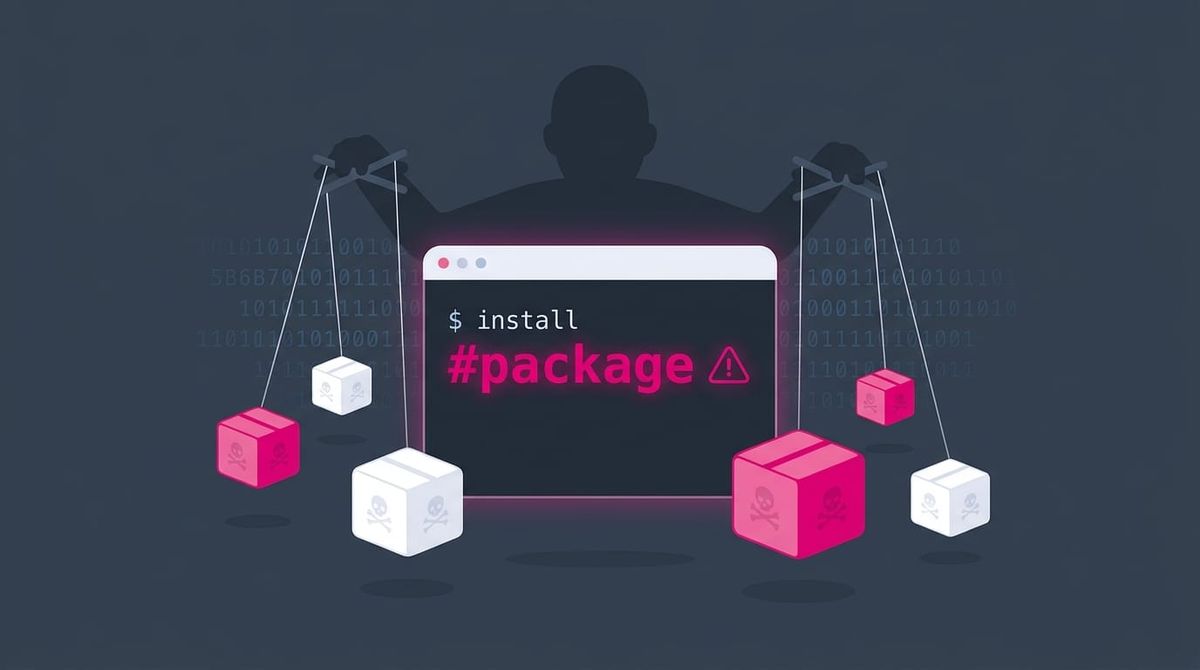
Cool Finds
- Claude Opus 4.7: Anthropic's new flagship; xhigh effort,
/ultrareview, Auto mode for Max plans. Also a new tokenizer that quietly raises effective cost. Worth benchmarking against your workloads - LiteLLM + LiteLLM Claude Code Proxy: unified API across dozens of providers. Perfect for routing Claude Code to any model and testing alternatives side by side
- Claude Managed Agents: Anthropic's cloud-run agent environments with memory stores, events, multi-agent orchestration. Worth watching
- Anthropic CLI (ant): a new CLI from Anthropic; lean and agent-friendly
- Claude Code Routines: scheduled Claude Code sessions, triggered by cron, API, or GitHub events. Opens a whole new category of use cases
- Sidenotes plugin for Obsidian: annotate Obsidian notes with margin notes, Edward Tufte style. Beautiful
YouTube
I did not publish new videos on YouTube this week, but I hit cool new milestones with my channel:
- 10K views during the last 28 days (477 hours of watch time)
- 840 subscribers
- 2.2K hours of watch time in total
If you haven't subscribed yet, don't forget to do so. More content is coming!

Tip of the Week
Turn your workflows into AI Skills, not prompts.
Most people save their best AI usage as a note with "the prompt that worked". Then next week, they copy-paste it again. And again. And again.
Instead, package it as a skill. A skill is just:
- A folder with a
SKILL.mdfile - A short description that tells the agent when to trigger it
- Clear instructions for what to do
- Optional scripts, templates, or references
Once you do that, the workflow becomes:
- Reusable: you trigger it by intent, not by pasting
- Portable: push it to a GitHub repo,
npx skills addon any other machine, done - Shareable: open-source it if it's useful to others (like I did with my Garmin, arXiv, and Scholar skills)
- Improvable: iterate on the skill file, the agent gets better automatically
Think about the 3-5 AI workflows you reuse the most. Prompt-hunting is a waste of time. Build the skills once and move on. This is the single highest-leverage habit I've developed this year.
Bonus tip: point your AI to the AI Skills specifications (agentskills.io/specification), and then ask it to create an AI Skills for X. This works perfectly, and generates specification-compliant skills.
Until Next Time
Three weeks of shipping in one newsletter. When the knowledge base, the AI agents, the AI skills, and the plugins all compound, a week starts looking like a month. That's the real promise of a solid Knowledge system paired with AI. Not speed for its own sake; leverage.
If you want in on this, the Obsidian Starter Kit is the fastest way to get started with the exact setup I use daily. And Knowii Community is where we go deeper; workshops, masterclasses, peer feedback, and the group of people pushing this forward together.
As always, thank you for reading. Reply to this email if something resonated, something annoyed you, or you just want to say hi. I read everything.
That's it for today! ✨
Stay Connected:
- Website: dsebastien.net
- Newsletter: dsebastien.net/newsletter
- Store: store.dsebastien.net
- Knowii Community: Knowii
- YouTube: @dsebastien
- Notes: notes.dsebastien.net
About Sébastien
Ready to get to the next level?
Found this valuable? Share it with someone who needs it.